Elizabeth Historic District

Why it's listed
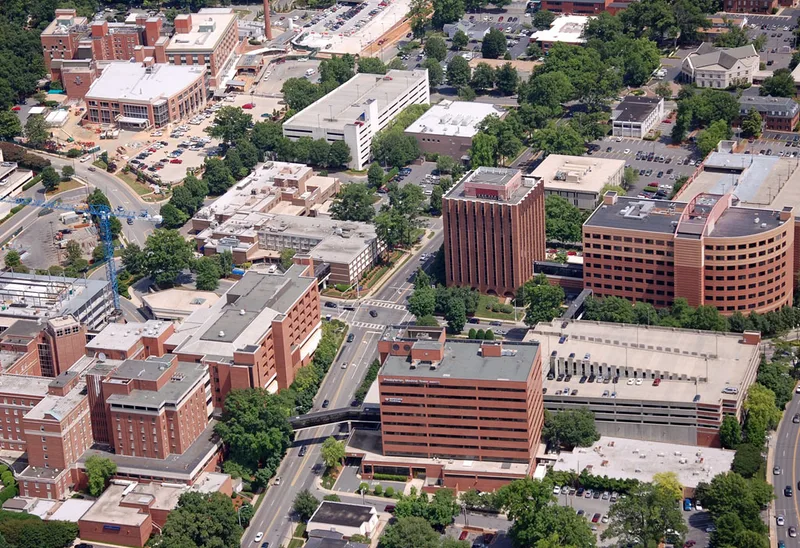
Built between 1900 and 1941 on a grid and curvilinear street plan about one mile east of Charlotte's central business district, this residential district covers roughly 265 acres across five subdivisions: Highland Park (1891), Piedmont Park (1900), Oakhurst (1900), Elizabeth Heights (1904) and Rosemont (1915). Most of its 803 principal buildings are single-family houses and small multi-family dwellings, including duplexes, triplexes and several apartment buildings. Frame and brick-veneered bungalows, Craftsman, Tudor Revival and Colonial Revival houses predominate. The district's streetcar lines, wide avenues and Independence Park, the city's first public park, shaped its layout. Its significance rests on its role in Charlotte's growth as a middle- and upper-income suburb, on its notable 1920s and 1930s apartment and duplex buildings, and on the park's association with landscape architect John Nolen. Later construction and the late 1940s highway have removed some early blocks.
Machine-generated summary. This summary was generated by a language model from the official nomination document and has not been reviewed line by line by an editor. It may contain errors. Check the source document before relying on any detail. Source: nomination document (PDF) · catalog entry. Generated October 2026 (model claude-haiku-5-5, prompt v1.1-2026-10-29).
| Period of significance | 1900-1941 |
|---|---|
| Styles | Craftsman, Colonial Revival, Tudor Revival, Bungalow, Neo-Classical Revival, Gothic Revival, Spanish Mission, Italian Renaissance Revival |
| Areas of significance | Community Planning and Development, Landscape Architecture, Architecture |
| Acreage | 265 |
| Boundary source | NPS cultural-resource GIS polygon |
| Full listing page | Elizabeth Historic District (property record) |
What listing means for this property
This is a historic district. Buildings within its boundary are either contributing (they add to the district's significance) or non-contributing. Owners of contributing income-producing buildings can claim the 20% federal rehabilitation tax credit; homeowners should look at state credits. National Register districts impose no design review by themselves; a local historic district ordinance, if one exists, does (the difference explained).
General information, not legal or tax advice. Rules change; confirm with your State Historic Preservation Office or a qualified adviser.