Elizabeth City Historic District (Boundary Increase II)

The National Park Service has not published a boundary polygon for this district; the map shows the listed properties inside it and the district's reference point.
Why it's listed
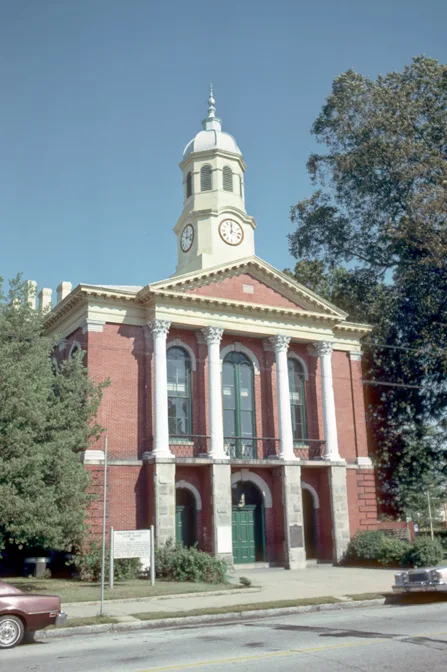
Elizabeth City's central district is a grid of streets on the Pasquotank River, laid out in 1793 on fifty acres bought from Adam and Elizabeth Tooley. The town grew as the terminus of the Dismal Swamp Canal, completed in 1805, which made it a depot for goods from the Albemarle region. Its buildings span the nineteenth century and include seven antebellum commercial buildings in Greek Revival, Gothic and Italianate styles, along with late Victorian stores. Nine known antebellum houses are scattered through the area, including the Grice-Fearing House, begun between 1789 and 1808, and the Pool-Kennedy-Lumsden House, built about 1840 as a town house. Greek Revival houses of the 1830s to 1860s line Church and Main streets. The district is also notable for its link to the Civil War: in February 1862 a Union fleet defeated a Confederate force downriver, and the courthouse was burned. The Victorian courthouse and the county government buildings remain prominent landmarks.
Machine-generated summary. This summary was generated by a language model from the official nomination document and has not been reviewed line by line by an editor. It may contain errors. Check the source document before relying on any detail. Source: nomination document (PDF) · catalog entry. Generated October 2026 (model claude-haiku-5-5, prompt v1.1-2026-10-29).
| Period of significance | 1793-1920 |
|---|---|
| Styles | Greek Revival, Georgian, Federal, Queen Anne, Colonial Revival, Gothic, Italianate |
| Areas of significance | Architecture |
| Acreage | 18.25 |
| Boundary source | not published |
| Full listing page | Elizabeth City Historic District (Boundary Increase II) (property record) |
What listing means for this property
This is a historic district. Buildings within its boundary are either contributing (they add to the district's significance) or non-contributing. Owners of contributing income-producing buildings can claim the 20% federal rehabilitation tax credit; homeowners should look at state credits. National Register districts impose no design review by themselves; a local historic district ordinance, if one exists, does (the difference explained).
General information, not legal or tax advice. Rules change; confirm with your State Historic Preservation Office or a qualified adviser.