Edenton Historic District

Why it's listed
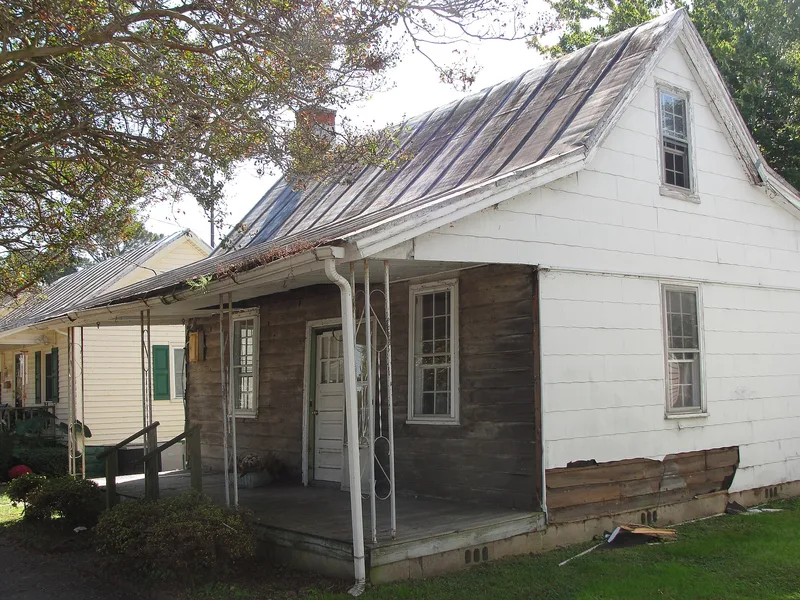
Edenton's historic district preserves the core of a small North Carolina coastal town that began as a village on Queen Anne's Creek and Edenton Bay. The town kept its original grid plan and its orientation to the water, with the courthouse green running down to the bay and a commercial district along Broad Street. Buildings span nearly three centuries. The 1725 Cupola House, St. Paul's Church and the 1769 Chowan County Courthouse form what the nomination calls the most important group of Georgian buildings in the state. Federal houses such as Beverly Hall, Greek Revival Pembroke Hall, the eclectic Wessington House, Gothic Revival cottages and Queen Anne houses add variety. Two-story frame houses with double porches recur across many periods and styles, giving blocks a consistent look. Slow growth after early prosperity left the scale, street trees and waterfront largely unchanged, and a rebuilt late-nineteenth-century commercial area survives with metal-front buildings.
Machine-generated summary. This summary was generated by a language model from the official nomination document and has not been reviewed line by line by an editor. It may contain errors. Check the source document before relying on any detail. Source: nomination document (PDF) · catalog entry. Generated October 2026 (model claude-sonnet-5-5, prompt v1.0-2026-10-29).
| Styles | Mixture of Georgian, Federal, Greek Revival, Gothic Revival, Italianate, Queen Anne and later styles |
|---|---|
| Areas of significance | Industry, Commerce, Historic - Non-Aboriginal, Politics/Government, Architecture |
| Acreage | 150 |
| Boundary source | NPS cultural-resource GIS polygon |
| Full listing page | Edenton Historic District (property record) |
What listing means for this property
This is a historic district. Buildings within its boundary are either contributing (they add to the district's significance) or non-contributing. Owners of contributing income-producing buildings can claim the 20% federal rehabilitation tax credit; homeowners should look at state credits. National Register districts impose no design review by themselves; a local historic district ordinance, if one exists, does (the difference explained).
General information, not legal or tax advice. Rules change; confirm with your State Historic Preservation Office or a qualified adviser.