Downtown Mocksville Historic District

Why it's listed
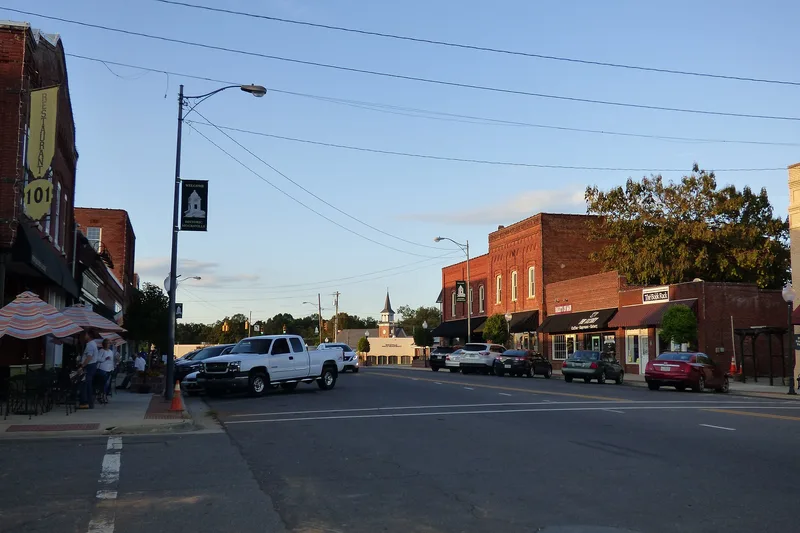
Mocksville's downtown grew around a town square planned in 1837, when Davie County was created and Mocksville named its seat. The district holds 22 contributing and 9 noncontributing resources, including the 1916 Davie County Courthouse, built using the shell of a 1909 building that burned, and the 1909 county jail of rusticated concrete block. Around the square are one- to three-story brick commercial buildings from about 1880 to the 1940s, among them the three-story Sanford Brothers Building of 1927, the former Princess Theatre, and the Johnstone Office Building of 1939. Small service stations from the 1920s and 1930s add Spanish Mission and Tudor Revival touches. The area is recognized as the only sizable historic urban commercial center in a mostly rural county, as the long-standing site of county government, and for its mix of modest vernacular and Classical Revival architecture. Many shopfronts have been altered, but upper floors largely survive.
Machine-generated summary. This summary was generated by a language model from the official nomination document and has not been reviewed line by line by an editor. It may contain errors. Check the source document before relying on any detail. Source: nomination document (PDF) · catalog entry. Generated October 2026 (model claude-sonnet-5-5, prompt v1.0-2026-10-29).
| Period of significance | ca. 1880-1940 |
|---|---|
| Styles | Commercial Vernacular, Classical Revival, Beaux Arts |
| Areas of significance | Commerce, Politics/Government, Architecture |
| Acreage | 6 |
| Boundary source | NPS cultural-resource GIS polygon |
| Full listing page | Downtown Mocksville Historic District (property record) |
What listing means for this property
This is a historic district. Buildings within its boundary are either contributing (they add to the district's significance) or non-contributing. Owners of contributing income-producing buildings can claim the 20% federal rehabilitation tax credit; homeowners should look at state credits. National Register districts impose no design review by themselves; a local historic district ordinance, if one exists, does (the difference explained).
General information, not legal or tax advice. Rules change; confirm with your State Historic Preservation Office or a qualified adviser.