Downtown Greensboro Historic District

Why it's listed
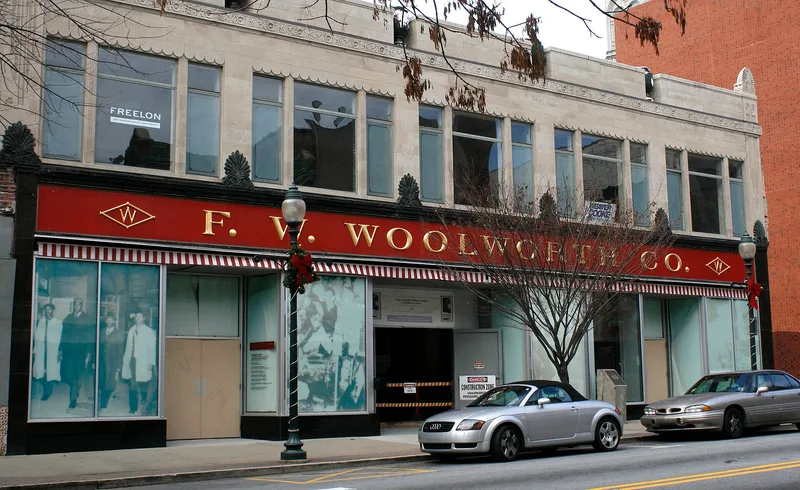
Downtown Greensboro's historic district covers about 58 acres of the city's traditional commercial core, running along Elm Street with parts of South Davie, Washington and South Greene Streets. Most buildings date from 1885 to 1930, when rail connections turned Greensboro from a small village into a trading center. Elm Street replaced Market Street as the main commercial area, and merchants who grew prosperous built larger, more elaborate stores. The architecture is mostly a plain commercial version of the Italianate style, with brick cornices, granite trim and galvanized iron details. Later landmarks include the Jefferson Standard Building, the Carolina Theatre, the Kress and Woolworth buildings and two Southern Railway depots. The nomination values the continuous streetscape as much as these landmarks, calling Elm Street a rare survival. The district was also tied to the city's influential citizens, and the Woolworth building is associated with the 1960 sit-ins, a key event of the Civil Rights Movement.
Machine-generated summary. This summary was generated by a language model from the official nomination document and has not been reviewed line by line by an editor. It may contain errors. Check the source document before relying on any detail. Source: nomination document (PDF) · catalog entry. Generated October 2026 (model claude-sonnet-5-5, prompt v1.0-2026-10-29).
| Period of significance | ca. 1885-1930 |
|---|---|
| Styles | Simplified commercial Italianate, with Art Deco, Neo-Classical, Romanesque, Spanish and Tudor examples |
| Areas of significance | Commerce, Transportation, Architecture, Performing Arts |
| Acreage | 58 |
| Boundary source | NPS cultural-resource GIS polygon |
| Full listing page | Downtown Greensboro Historic District (property record) |
What listing means for this property
This is a historic district. Buildings within its boundary are either contributing (they add to the district's significance) or non-contributing. Owners of contributing income-producing buildings can claim the 20% federal rehabilitation tax credit; homeowners should look at state credits. National Register districts impose no design review by themselves; a local historic district ordinance, if one exists, does (the difference explained).
General information, not legal or tax advice. Rules change; confirm with your State Historic Preservation Office or a qualified adviser.