Downtown Elkin Historic District

Why it's listed
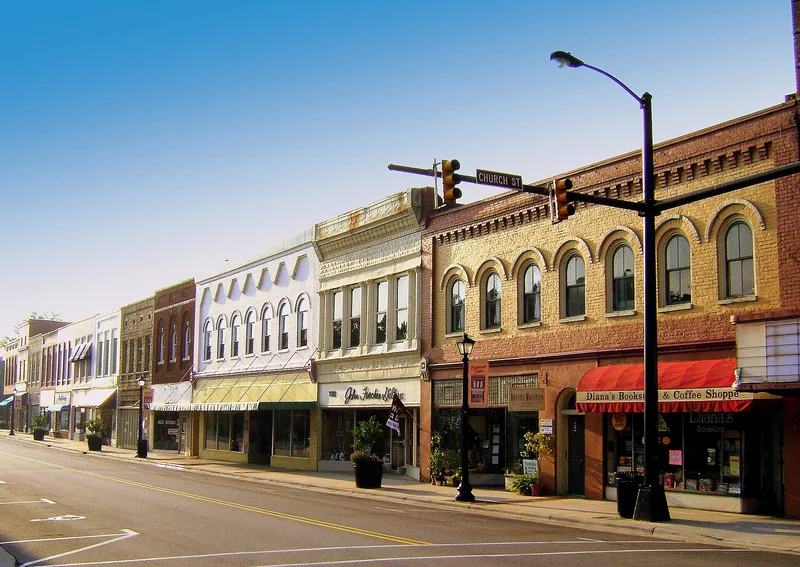
Downtown Elkin Historic District is the commercial heart of a small town at the meeting of the Yadkin River and Elkin Creek in Surry County, North Carolina. It contains 74 resources, mostly brick commercial buildings, along with five houses, the post office, a railroad line and the 1931 Hugh G. Chatham Bridge. Most date from about 1890 to 1950. The arrival of the railroad in 1890 shifted business eastward from Front Street toward the intersection of Main and Bridge streets, and brick construction became standard after a fire in 1898. Notable buildings include the Harris Building, whose facade is covered in decorative pressed metal, a rare survival in the region. Streamlined theaters from the late 1930s and 1940s, two 1923 Craftsman bungalows and the ca. 1855 Gwyn-Foard House, a Greek Revival dwelling with an unusual two-tier porch, add variety. Although many storefronts have been altered, the district still conveys its historic appearance.
Machine-generated summary. This summary was generated by a language model from the official nomination document and has not been reviewed line by line by an editor. It may contain errors. Check the source document before relying on any detail. Source: nomination document (PDF) · catalog entry. Generated October 2026 (model claude-sonnet-5-5, prompt v1.0-2026-10-29).
| Period of significance | ca. 1890-1950 |
|---|---|
| Styles | Commercial Style, Modernistic, Bungalow/Craftsman, Greek Revival |
| Areas of significance | Architecture, Commerce |
| Acreage | 25 |
| Boundary source | NPS cultural-resource GIS polygon |
| Full listing page | Downtown Elkin Historic District (property record) |
What listing means for this property
This is a historic district. Buildings within its boundary are either contributing (they add to the district's significance) or non-contributing. Owners of contributing income-producing buildings can claim the 20% federal rehabilitation tax credit; homeowners should look at state credits. National Register districts impose no design review by themselves; a local historic district ordinance, if one exists, does (the difference explained).
General information, not legal or tax advice. Rules change; confirm with your State Historic Preservation Office or a qualified adviser.