Cross Creek Cemetery Number One

The National Park Service has not published a boundary polygon for this district; the map shows the listed properties inside it and the district's reference point.
Why it's listed
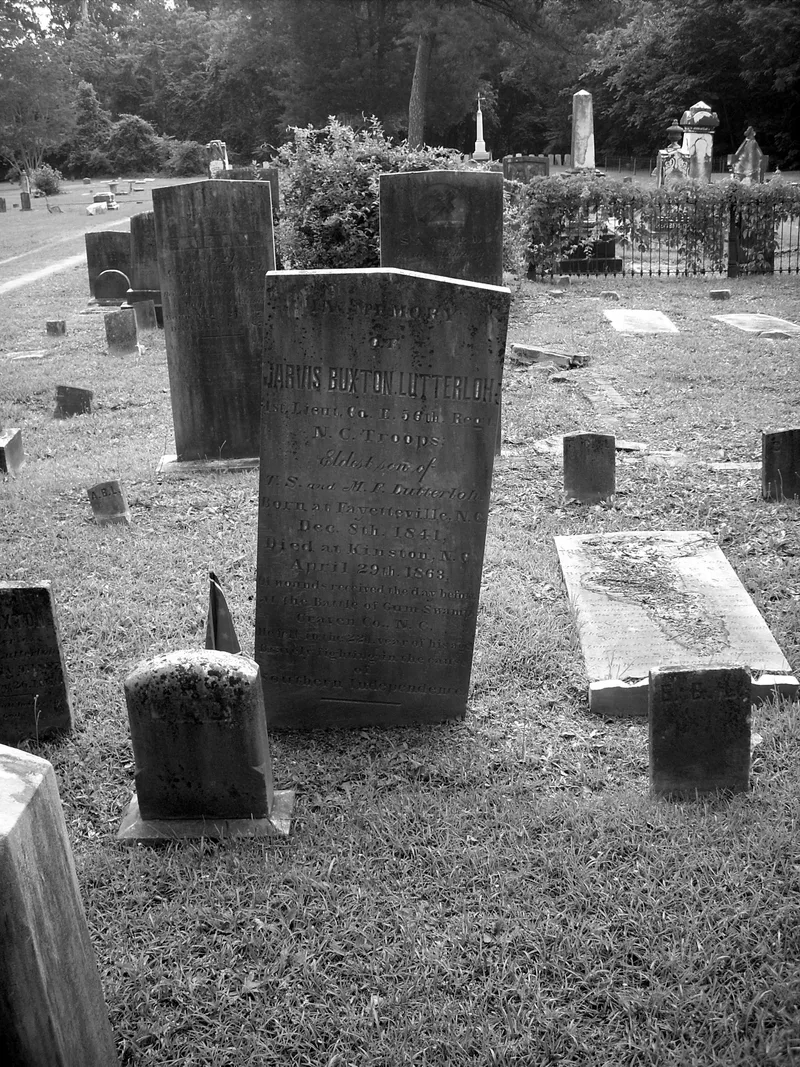
Cross Creek Cemetery Number One, a public burying ground in Fayetteville, was deeded to the town by James Hogg in 1785 and expanded in 1833 under the will of John Eccles, who required the northern section to be laid out in small lots on the plan of the New Haven graveyard. Its roughly 1,170 gravemarkers range from a 1786 slate discoid headstone to a 1964 marker, and include ledgers, box tombs, table-tombs, obelisks and headstones. The cemetery holds the premier collection of stones cut by Scottish stonecutter George Lauder, who operated a marble yard in Fayetteville from 1845 until his death in 1888. The graves include early merchants, clergymen, militia captains, a federal judge, a navy secretary and a former acting governor of North Carolina. The first Confederate monument in North Carolina, erected in December 1868, stands at the eastern edge of the grounds. The cemetery is also valued for its brick retaining wall along Cross Creek and its historic burial record.
Machine-generated summary. This summary was generated by a language model from the official nomination document and has not been reviewed line by line by an editor. It may contain errors. Check the source document before relying on any detail. Source: nomination document (PDF) · catalog entry. Generated October 2026 (model claude-haiku-5-5, prompt v1.1-2026-10-29).
| Period of significance | 1785-1948 |
|---|---|
| Areas of significance | Social History, Art |
| Acreage | 5 |
| Boundary source | not published |
| Full listing page | Cross Creek Cemetery Number One (property record) |
What listing means for this property
This is a historic district. Buildings within its boundary are either contributing (they add to the district's significance) or non-contributing. Owners of contributing income-producing buildings can claim the 20% federal rehabilitation tax credit; homeowners should look at state credits. National Register districts impose no design review by themselves; a local historic district ordinance, if one exists, does (the difference explained).
General information, not legal or tax advice. Rules change; confirm with your State Historic Preservation Office or a qualified adviser.