Croft Historic District

Why it's listed
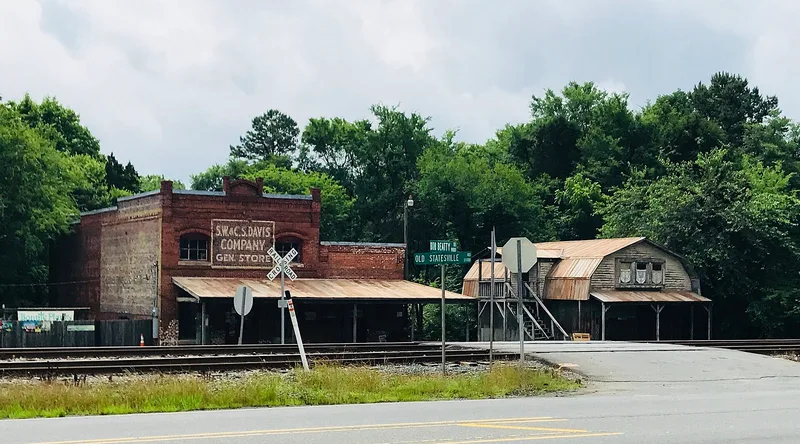
Croft is a small cluster of buildings beside the old Atlantic, Tennessee and Ohio Railroad tracks north of Charlotte, preserved as the core of a late nineteenth and early twentieth-century rural railroad settlement. The centerpiece is the 1908 two-story brick general store built by brothers Silas Winslow and Charles Spencer Davis, with its original shop front, interior and painted signage largely intact. Nearby are cotton and fertilizer warehouses, the brothers' 1903 Queen Anne house with a wraparound porch and lathe-turned detail, a small brick flower house, and the former two-story Croft School, built around 1890 and enlarged around 1912. The tracks that brought goods and carried cotton to market form the western edge. Although surrounded by subdivisions, warehouses and industry, mature trees preserve a rural character. The district was listed as the best surviving example of this type of settlement in Mecklenburg County, for its role in community development and for the quality of its store, house and school.
Machine-generated summary. This summary was generated by a language model from the official nomination document and has not been reviewed line by line by an editor. It may contain errors. Check the source document before relying on any detail. Source: nomination document (PDF) · catalog entry. Generated October 2026 (model claude-sonnet-5-5, prompt v1.0-2026-10-29).
| Period of significance | ca. 1890 - ca. 1940 |
|---|---|
| Styles | Queen Anne; Commercial Style |
| Areas of significance | Community Planning and Development, Architecture |
| Acreage | 8 |
| Boundary source | NPS cultural-resource GIS polygon |
| Full listing page | Croft Historic District (property record) |
What listing means for this property
This is a historic district. Buildings within its boundary are either contributing (they add to the district's significance) or non-contributing. Owners of contributing income-producing buildings can claim the 20% federal rehabilitation tax credit; homeowners should look at state credits. National Register districts impose no design review by themselves; a local historic district ordinance, if one exists, does (the difference explained).
General information, not legal or tax advice. Rules change; confirm with your State Historic Preservation Office or a qualified adviser.