Credle, George V., House and Cemetery

Why it's listed
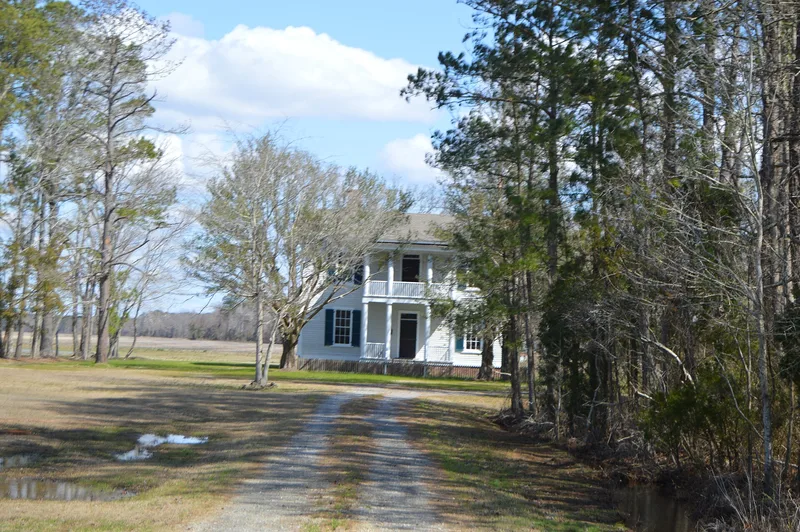
Set back from US 264 on flat Hyde County land near Rose Bay, this two-story Greek Revival house once anchored a large plantation. It has fluted porch columns, molded corner boards, a low gable roof with box cornices and returns, and a divided center-hall plan with twelve-foot ceilings. Inside, the original plaster, grained oak doors, mantels and upstairs closets survive, and only the front porch was altered, in the early twentieth century. George V. Credle, a farmer and merchant, bought the 1,798-acre tract in 1855 and probably built the house soon after. Earlier owners included the Grimes family, descendants of John Gray Blount. The house stayed in Credle hands through four generations. A small family cemetery behind it holds George V. Credle, his wife and descendants. The house is regarded as the finest nineteenth-century dwelling in the township and is now vacant and weathered, though sound in structure.
Machine-generated summary. This summary was generated by a language model from the official nomination document and has not been reviewed line by line by an editor. It may contain errors. Check the source document before relying on any detail. Source: nomination document (PDF) · catalog entry. Generated October 2026 (model claude-sonnet-5-5, prompt v1.0-2026-10-29).
| Period of significance | 1800-1899 |
|---|---|
| Styles | Greek Revival |
| Areas of significance | Exploration/Settlement, Politics/Government, Architecture, Agriculture |
| Acreage | 39.5 |
| Boundary source | NPS cultural-resource GIS polygon |
| Full listing page | Credle, George V., House and Cemetery (property record) |
What listing means for this property
This is a historic district. Buildings within its boundary are either contributing (they add to the district's significance) or non-contributing. Owners of contributing income-producing buildings can claim the 20% federal rehabilitation tax credit; homeowners should look at state credits. National Register districts impose no design review by themselves; a local historic district ordinance, if one exists, does (the difference explained).
Noted as vacant in the nomination. Nomination documents can be decades old; current status may differ. If you are considering buying an empty listed property, read the due-diligence checklist.
General information, not legal or tax advice. Rules change; confirm with your State Historic Preservation Office or a qualified adviser.