College View Historic District

Why it's listed
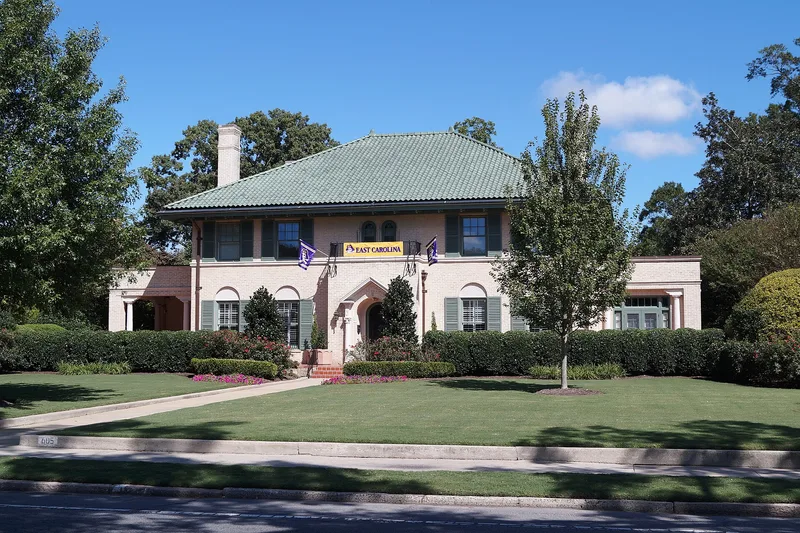
College View is a neighborhood of 343 contributing and 51 noncontributing resources just east of downtown Greenville, North Carolina, between Holly and Eastern Streets and north of East Carolina University. Open farmland was subdivided and built up mainly from 1909 through World War II, growing as the East Carolina Teachers Training School expanded. Streets follow a grid, with mature oaks and pecans, granite curbs, small front yards and consistent setbacks. The largest, most stylish houses face the campus on East Fifth Street. Craftsman Bungalows, Colonial Revival, Tudor Revival and Spanish-influenced houses predominate, the last inspired by campus buildings. Most homes are modest versions of popular styles drawn from magazines or stock plans, though local architects and the Ballard and Ballard design-build firm produced some. Non-residential buildings include St. Paul's Episcopal Church of 1930 and the 1921 Rotary Club Building. Many houses keep period garages. Some have been converted to student apartments, fraternities or university offices, but most retain their original form.
Machine-generated summary. This summary was generated by a language model from the official nomination document and has not been reviewed line by line by an editor. It may contain errors. Check the source document before relying on any detail. Source: nomination document (PDF) · catalog entry. Generated October 2026 (model claude-sonnet-5-5, prompt v1.0-2026-10-29).
| Styles | Craftsman Bungalow, Colonial Revival, Tudor Revival, Mission/Spanish Colonial Revival, Italian Renaissance Revival |
|---|---|
| Areas of significance | Community Planning and Development, Architecture |
| Acreage | 57 |
| Boundary source | NPS cultural-resource GIS polygon |
| Full listing page | College View Historic District (property record) |
What listing means for this property
This is a historic district. Buildings within its boundary are either contributing (they add to the district's significance) or non-contributing. Owners of contributing income-producing buildings can claim the 20% federal rehabilitation tax credit; homeowners should look at state credits. National Register districts impose no design review by themselves; a local historic district ordinance, if one exists, does (the difference explained).
General information, not legal or tax advice. Rules change; confirm with your State Historic Preservation Office or a qualified adviser.