Cold Spring Park Historic District

Why it's listed
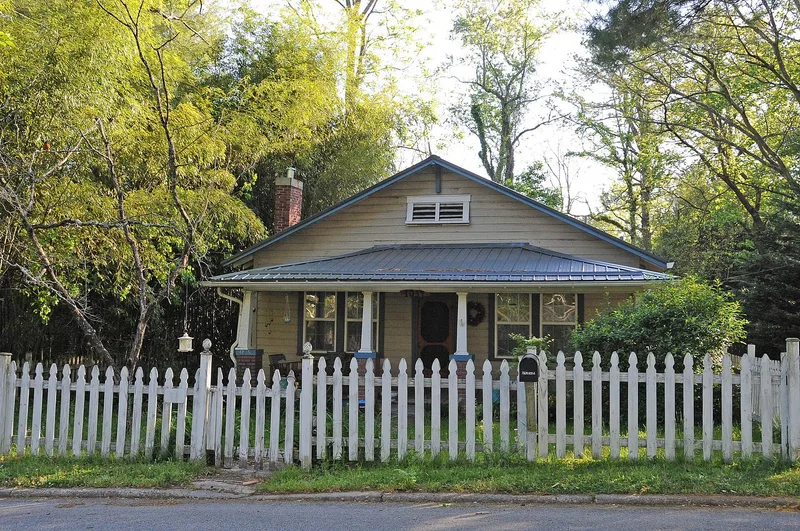
Cold Spring Park is a residential neighborhood of about fourteen acres on a grid of streets north of downtown Hendersonville, North Carolina. Its houses were built on lots platted in 1921 from an earlier 1910 subdivision called Wheeler Park, mostly during the 1920s and again in the late 1940s and early 1950s. The majority are one-story Craftsman bungalows, typically with exposed rafter ends, knee braces, and front porches on brick piers, and the district also includes Ranch houses from the 1950s. Sanborn maps and city directories from the 1930s show that many residents were working-class families employed at nearby industries, including a cord braiding plant, a Coca-Cola bottling plant, and the Southern Railway. The district is significant for documenting this neighborhood's role in the city's housing boom, and for its collection of bungalows that retain much of their original form. Stone retaining walls and field stone features give the hillside streets a distinctive character.
Machine-generated summary. This summary was generated by a language model from the official nomination document and has not been reviewed line by line by an editor. It may contain errors. Check the source document before relying on any detail. Source: nomination document (PDF) · catalog entry. Generated October 2026 (model claude-haiku-5-5, prompt v1.1-2026-10-29).
| Period of significance | ca. 1910-1953 |
|---|---|
| Styles | Craftsman bungalow; Ranch; Colonial Revival |
| Areas of significance | Architecture, Community Planning and Development |
| Acreage | 14 |
| Boundary source | NPS cultural-resource GIS polygon |
| Full listing page | Cold Spring Park Historic District (property record) |
What listing means for this property
This is a historic district. Buildings within its boundary are either contributing (they add to the district's significance) or non-contributing. Owners of contributing income-producing buildings can claim the 20% federal rehabilitation tax credit; homeowners should look at state credits. National Register districts impose no design review by themselves; a local historic district ordinance, if one exists, does (the difference explained).
General information, not legal or tax advice. Rules change; confirm with your State Historic Preservation Office or a qualified adviser.