Clingman Avenue Historic District

The National Park Service has not published a boundary polygon for this district; the map shows the listed properties inside it and the district's reference point.
Why it's listed
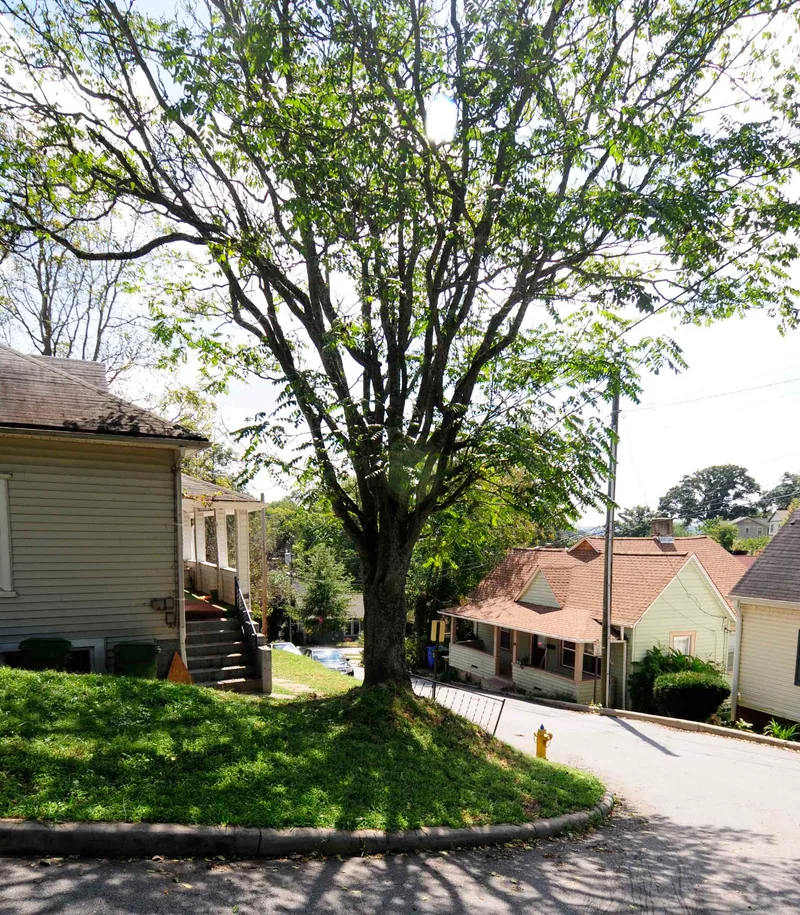
Clingman Avenue Historic District occupies about seven acres just south of Patton Avenue on the west side of downtown Asheville. Small lots, some perched on hills and others dropping steeply to the rear, hold 33 contributing houses and outbuildings and seven non-contributing buildings, with eleven vacant lots between them. Most are one-story cottages or bungalows, including hip roof, front gable and L-plan types dating from 1896 to the 1940s, along with a few larger two-story Queen Anne houses such as the 1896 C. C. Brown House. Two brick cottages on Yarrow Street, built in 1943, are exceptions to the predominantly wood frame construction. Built mainly as speculative rental housing, the neighborhood was first occupied by white tenants, including railroad workers and carpenters. From about 1911 onward African American renters and owners increasingly took over the houses, working as porters, maids, cooks and drivers. Directory research documents these occupants house by house, and the surviving buildings preserve the area's early twentieth-century character.
Machine-generated summary. This summary was generated by a language model from the official nomination document and has not been reviewed line by line by an editor. It may contain errors. Check the source document before relying on any detail. Source: nomination document (PDF) · catalog entry. Generated October 2026 (model claude-sonnet-5-5, prompt v1.0-2026-10-29).
| Styles | Queen Anne, bungalow, hip roof cottages |
|---|---|
| Areas of significance | Social History, Black |
| Acreage | 6.8 |
| Boundary source | not published |
| Full listing page | Clingman Avenue Historic District (property record) |
What listing means for this property
This is a historic district. Buildings within its boundary are either contributing (they add to the district's significance) or non-contributing. Owners of contributing income-producing buildings can claim the 20% federal rehabilitation tax credit; homeowners should look at state credits. National Register districts impose no design review by themselves; a local historic district ordinance, if one exists, does (the difference explained).
General information, not legal or tax advice. Rules change; confirm with your State Historic Preservation Office or a qualified adviser.