Chinqua-Penn Plantation

Why it's listed
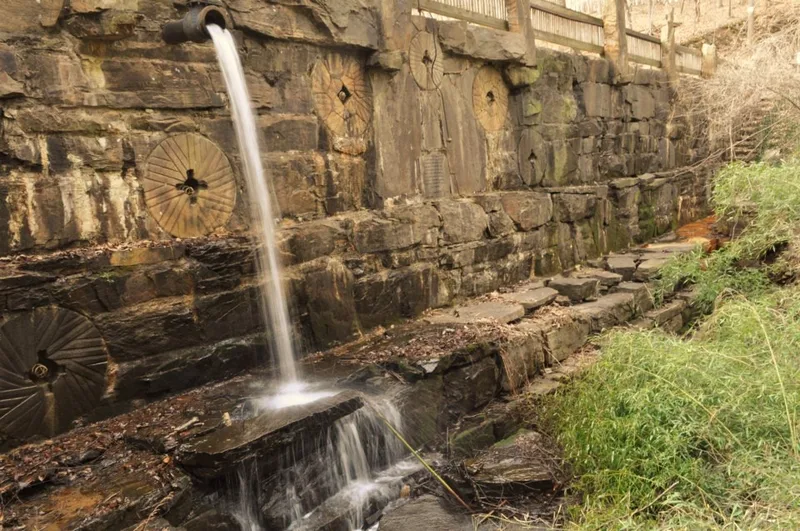
Chinqua-Penn Plantation is a 23-acre country estate about two miles northwest of Reidsville, in North Carolina's northern piedmont. Tobacco heir Jeff Penn and his wife Betsy developed it in the 1920s and 1930s. The centerpiece is a Y-shaped manor house built from 1923 to 1925 to designs by New York architect Harry C. Ingalls. Its exterior of stone rubble, horizontal logs and slate roofs, made from materials taken from the property, was meant to suit the countryside. Inside, the rooms deliberately mix styles, including Spanish, Italian Renaissance, English Jacobean, Pompeiian and Chinese, using paneling, mantels and columns salvaged from Europe and Asia. The grounds, laid out by a Buffalo landscape architect, include gate lodges, a pagoda beside a pool, a greenhouse, stone sentry houses, a rookery and four distinct gardens. The estate counts 23 contributing resources. It is regarded as one of the few grand early twentieth-century country estates in the state and has been a public attraction since 1966.
Machine-generated summary. This summary was generated by a language model from the official nomination document and has not been reviewed line by line by an editor. It may contain errors. Check the source document before relying on any detail. Source: nomination document (PDF) · catalog entry. Generated October 2026 (model claude-sonnet-5-5, prompt v1.0-2026-10-29).
| Styles | Other: Eclectic |
|---|---|
| Areas of significance | Landscape Architecture, Architecture, Social History |
| Acreage | 22.8 |
| Boundary source | NPS cultural-resource GIS polygon |
| Full listing page | Chinqua-Penn Plantation (property record) |
What listing means for this property
This is a historic district. Buildings within its boundary are either contributing (they add to the district's significance) or non-contributing. Owners of contributing income-producing buildings can claim the 20% federal rehabilitation tax credit; homeowners should look at state credits. National Register districts impose no design review by themselves; a local historic district ordinance, if one exists, does (the difference explained).
General information, not legal or tax advice. Rules change; confirm with your State Historic Preservation Office or a qualified adviser.