Cheoah Hydroelectric Development

Why it's listed
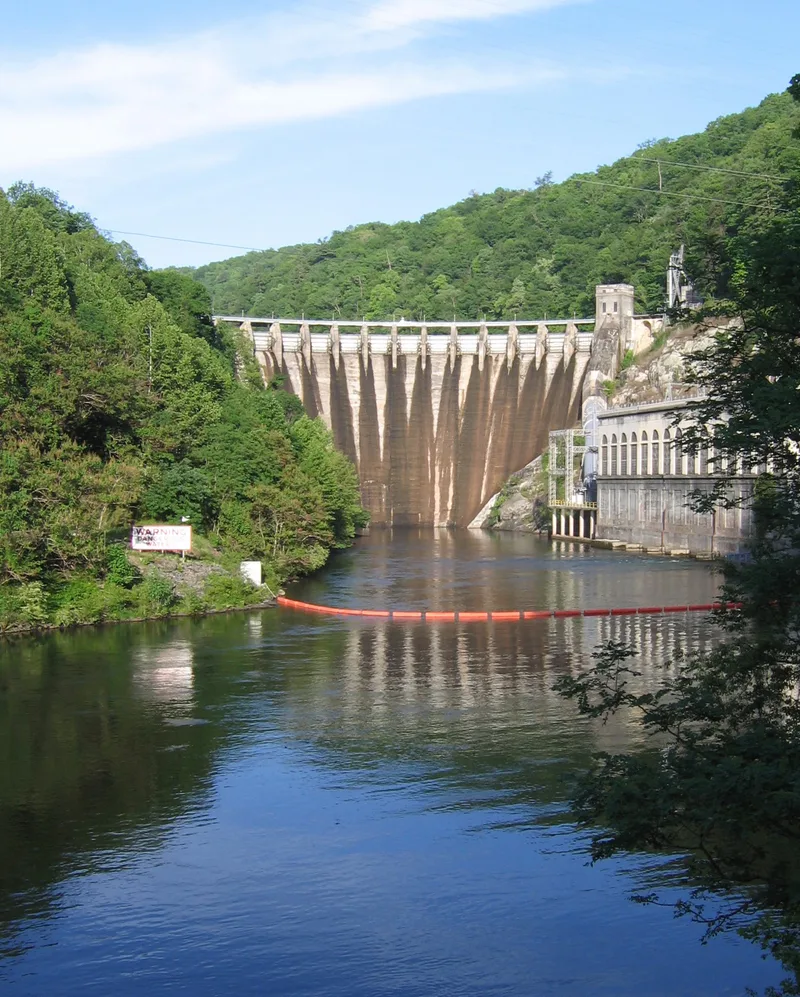
Built on the Little Tennessee River between 1916 and 1919, the Cheoah Hydroelectric Development was the first of four Alcoa-built facilities in the Tapoco Hydroelectric Project. The complex includes a gravity-type concrete arched dam 225 feet high and 750 feet long, a reinforced concrete powerhouse, a penstock building, two concrete gatehouses and a steel gantry crane. Operation began in April 1919, and the dam was then the highest overflow dam in the world, while its powerhouse held the largest hydroelectric generating units. The power generated was carried 28 miles by transmission lines to the aluminum reduction plant at Alcoa, Tennessee. A fifth turbine was added in 1949. The development is significant for its engineering design and its role in supplying electricity to the regional aluminum industry. Its original concrete surfaces and powerhouse windows remain largely intact.
Machine-generated summary. This summary was generated by a language model from the official nomination document and has not been reviewed line by line by an editor. It may contain errors. Check the source document before relying on any detail. Source: nomination document (PDF) · catalog entry. Generated October 2026 (model claude-haiku-5-5, prompt v1.1-2026-10-29).
| Period of significance | 1919-1953 |
|---|---|
| Styles | Late 19th & early 20th century revivals / Classical Revival |
| Areas of significance | Engineering, Architecture, Industry |
| Acreage | 25 |
| Boundary source | NPS cultural-resource GIS polygon |
| Full listing page | Cheoah Hydroelectric Development (property record) |
What listing means for this property
This is a historic district. Buildings within its boundary are either contributing (they add to the district's significance) or non-contributing. Owners of contributing income-producing buildings can claim the 20% federal rehabilitation tax credit; homeowners should look at state credits. National Register districts impose no design review by themselves; a local historic district ordinance, if one exists, does (the difference explained).
General information, not legal or tax advice. Rules change; confirm with your State Historic Preservation Office or a qualified adviser.