Carpenter Historic District

Why it's listed
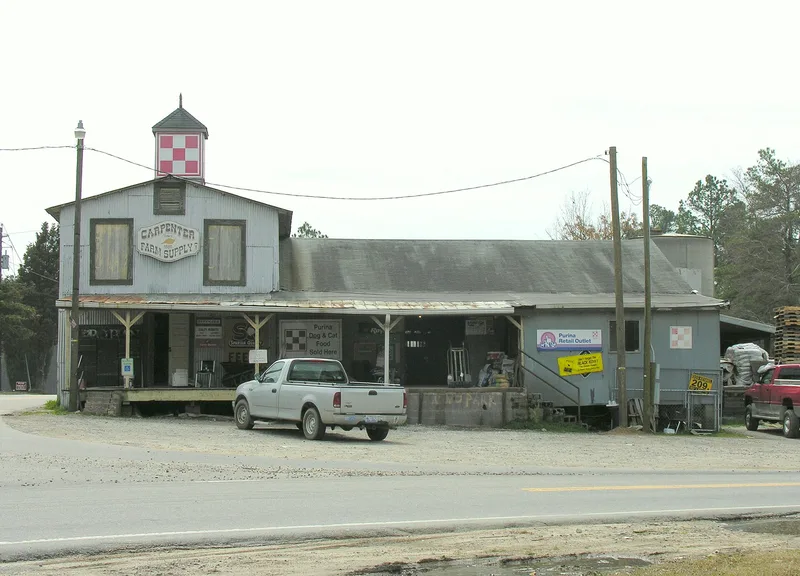
Carpenter is a rural crossroads community in western Wake County, North Carolina, now partly within the Town of Cary. The district covers roughly 210 acres of rolling farmland and pine woods, centered on a commercial crossroads beside the former Durham and Southern Railroad tracks. Three general stores, including the Carpenter Farm Supply Company begun around 1895 and expanded with a two-story brick section in 1916, sit among six modest homes of store families and workers. East of the crossroads are eight small farmsteads with curing barns, packhouses and other tobacco outbuildings, along with Good Hope Baptist Church and its cemetery. The community grew with the railroad, which arrived around 1906, and with bright leaf tobacco farming, which favored small farms. Its buildings, field patterns and setting remain largely intact from the early twentieth century, even as suburban development approaches. The district was recognized for its architecture, agricultural history and role as a well-preserved crossroads settlement, with a significance period running to 1933.
Machine-generated summary. This summary was generated by a language model from the official nomination document and has not been reviewed line by line by an editor. It may contain errors. Check the source document before relying on any detail. Source: nomination document (PDF) · catalog entry. Generated October 2026 (model claude-sonnet-5-5, prompt v1.0-2026-10-29).
| Period of significance | Late nineteenth century - 1933 |
|---|---|
| Styles | Late Victorian, Colonial Revival, Commercial Style, No style |
| Areas of significance | Architecture, Agriculture, Community Planning and Development |
| Acreage | 210 |
| Boundary source | NPS cultural-resource GIS polygon |
| Full listing page | Carpenter Historic District (property record) |
What listing means for this property
This is a historic district. Buildings within its boundary are either contributing (they add to the district's significance) or non-contributing. Owners of contributing income-producing buildings can claim the 20% federal rehabilitation tax credit; homeowners should look at state credits. National Register districts impose no design review by themselves; a local historic district ordinance, if one exists, does (the difference explained).
General information, not legal or tax advice. Rules change; confirm with your State Historic Preservation Office or a qualified adviser.