Carl Sandburg Home National Historic Site

Why it's listed
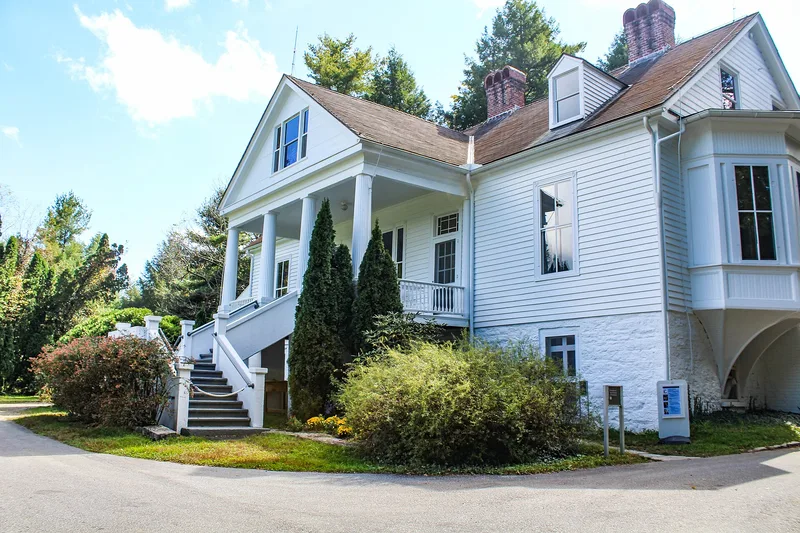
Connemara is an estate of about 242 acres in Flat Rock, North Carolina, where poet and Lincoln biographer Carl Sandburg lived from 1945 until his death in 1967. The property holds 32 buildings, including a 1.5-story frame main house with a pedimented porch and Roman Doric columns, a guest house dating to about 1838, tenant houses, and a farm complex of barns, sheds, a milk house and a stone silo. Paula Sandburg raised a prize-winning herd of Nubian, Toggenburg and Saanen goats here, and the herd once reached 300 animals. Sandburg wrote many major works at the estate, including Remembrance Rock and Complete Poems. Christopher Memminger first developed the land as a summer residence, and textile businessman Ellison Adger Smyth later renamed it Connemara. Uncurtained windows, plain furniture, bookcases and stacks of papers still reflect the family's simple way of life. The grounds, with ponds, wooded trails and a winding entrance drive, remain largely as the Sandburgs knew them.
Machine-generated summary. This summary was generated by a language model from the official nomination document and has not been reviewed line by line by an editor. It may contain errors. Check the source document before relying on any detail. Source: nomination document (PDF) · catalog entry. Generated October 2026 (model claude-sonnet-5-5, prompt v1.0-2026-10-29).
| Period of significance | 1945-1967 |
|---|---|
| Areas of significance | Agriculture, Literature, Social History |
| Acreage | 246 |
| Boundary source | NPS cultural-resource GIS polygon |
| Full listing page | Carl Sandburg Home National Historic Site (property record) |
What listing means for this property
This is a historic district. Buildings within its boundary are either contributing (they add to the district's significance) or non-contributing. Owners of contributing income-producing buildings can claim the 20% federal rehabilitation tax credit; homeowners should look at state credits. National Register districts impose no design review by themselves; a local historic district ordinance, if one exists, does (the difference explained).
General information, not legal or tax advice. Rules change; confirm with your State Historic Preservation Office or a qualified adviser.