Camp Merrie-Woode

Why it's listed
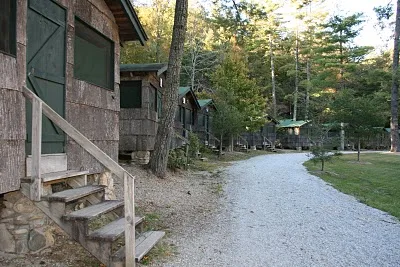
Camp Merrie-Woode is a girls' summer camp in the Sapphire Valley near Cashiers, Jackson County, North Carolina, on the north shore of Fairfield Lake at the foot of Bald Rock and Cowrock mountains. It opened in 1919 as Camp Fairfield Lake, serving daughters of guests at the nearby Fairfield Inn. Mabel Dammie Day bought it in 1922, renamed it, and led it for three decades, adding English-themed traditions such as age groups called pages, squires, yeomen and knights. Its buildings, mostly one-story frame cabins and halls, are sided with bark, split logs and board-and-batten and rest on wood piers or stone foundations. The camp is regarded as an outstanding local group of Adirondack-style rustic buildings set in an undeveloped mountain landscape. Its significance rests on its role in early-twentieth-century girls' camping and on this intact architectural and rural setting.
Machine-generated summary. This summary was generated by a language model from the official nomination document and has not been reviewed line by line by an editor. It may contain errors. Check the source document before relying on any detail. Source: nomination document (PDF) · catalog entry. Generated October 2026 (model claude-haiku-5-5, prompt v1.1-2026-10-29).
| Period of significance | 1919-1945 |
|---|---|
| Styles | Adirondack style |
| Areas of significance | Architecture, Entertainment/Recreation |
| Acreage | 15 |
| Boundary source | NPS cultural-resource GIS polygon |
| Full listing page | Camp Merrie-Woode (property record) |
What listing means for this property
This is a historic district. Buildings within its boundary are either contributing (they add to the district's significance) or non-contributing. Owners of contributing income-producing buildings can claim the 20% federal rehabilitation tax credit; homeowners should look at state credits. National Register districts impose no design review by themselves; a local historic district ordinance, if one exists, does (the difference explained).
General information, not legal or tax advice. Rules change; confirm with your State Historic Preservation Office or a qualified adviser.