Cameron Park (Additional Documentation)

Why it's listed
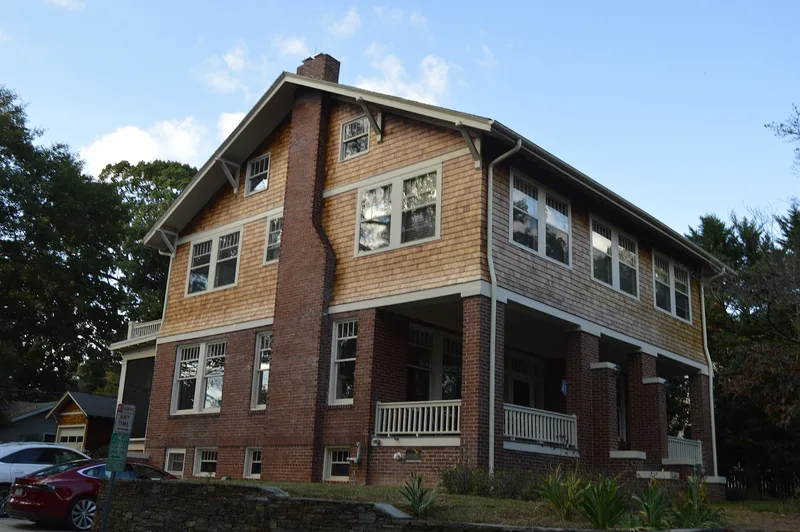
Cameron Park is a residential neighborhood in Raleigh, laid out in 1910 by the Hunter-Parker Realty Company on land taken from the Cameron family holdings. Its most distinctive feature is the terrain: three ravines cut through a gently sloping site, and the street plan wraps around them, turning them into parks such as Brown Park and Green Park. Houses built mostly between about 1910 and the 1930s include two-story Colonial Box types, many bungalows, and scattered Tudor Revival, Spanish-influenced and Picturesque designs. A triangular reserved section was developed from 1927 with smaller, brick-veneered houses. Two schools anchor the district: Wiley School, opened in 1926 and designed by C. Gadsen Sayre, and Needham Broughton High School, opened in 1929 and designed by William H. Deitrick in the Romanesque Revival style. After decades of pressure from nearby university growth, rental conversions and commercial development, the neighborhood was rehabilitated by new residents. The listing recognizes its planned landscape and its intact collection of period architecture.
Machine-generated summary. This summary was generated by a language model from the official nomination document and has not been reviewed line by line by an editor. It may contain errors. Check the source document before relying on any detail. Source: nomination document (PDF) · catalog entry. Generated October 2026 (model claude-sonnet-5-5, prompt v1.0-2026-10-29).
| Styles | Predominantly Colonial Revival 'Box' houses and bungalows, with Georgian Revival, Tudor Revival, Spanish/Mission and Picturesque examples; Needham Broughton is Romanesque Revival |
|---|---|
| Areas of significance | Community Planning and Development, Landscape Architecture, Commerce, Architecture, Social History |
| Acreage | 105 |
| Boundary source | NPS cultural-resource GIS polygon |
| Full listing page | Cameron Park (Additional Documentation) (property record) |
What listing means for this property
This is a historic district. Buildings within its boundary are either contributing (they add to the district's significance) or non-contributing. Owners of contributing income-producing buildings can claim the 20% federal rehabilitation tax credit; homeowners should look at state credits. National Register districts impose no design review by themselves; a local historic district ordinance, if one exists, does (the difference explained).
General information, not legal or tax advice. Rules change; confirm with your State Historic Preservation Office or a qualified adviser.