Bryan-Bell Farm

Why it's listed
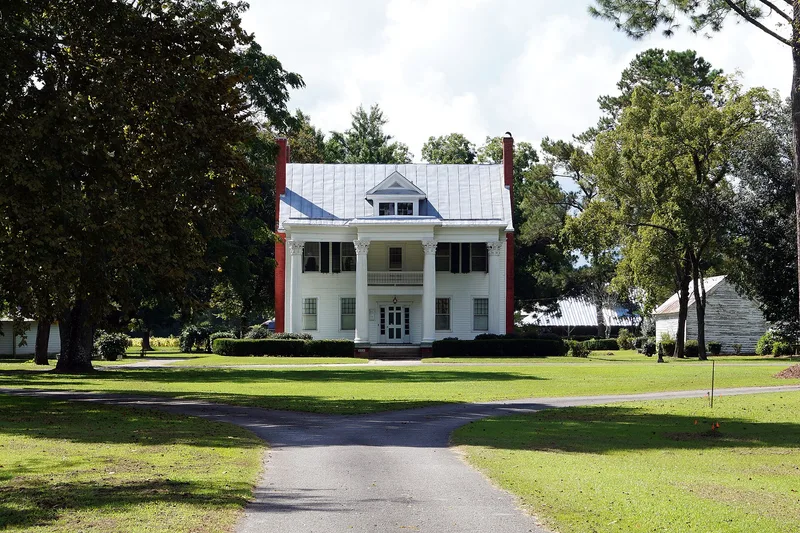
Pollocksville's western approaches hold the Bryan-Bell Farm, a 2251-acre tract of woodland and cultivated fields along NC 58 in Jones County. The plantation core was established by James C. Bryan, who bought the land in 1844 and probably built the two-and-a-half-story frame house in the early 1840s in the Late Federal style. In 1920, Joseph Hiram Bell's son Edward Earl Bell had the house remodelled in the Neo-Classical Revival style, adding a monumental four-column Corinthian portico. The property is regarded as a rare surviving intact nineteenth-century plantation in the county. Its landscape of fields divided by drainage ditches, and its outbuildings from the 1840s through the 1940s, document changes in land use from the antebellum period through tenant farming and mid-twentieth-century livestock raising. The house interior also keeps Late Federal mantels and mahogany-grained transom elements. The farm's enslaved workforce, owned by the Bryans, is documented in census records.
Machine-generated summary. This summary was generated by a language model from the official nomination document and has not been reviewed line by line by an editor. It may contain errors. Check the source document before relying on any detail. Source: nomination document (PDF) · catalog entry. Generated October 2026 (model claude-haiku-5-5, prompt v1.1-2026-10-29).
| Period of significance | 1844-1939 |
|---|---|
| Styles | Late Federal; Neo-Classical Revival |
| Areas of significance | Agriculture, Architecture |
| Acreage | 2251 |
| Boundary source | NPS cultural-resource GIS polygon |
| Full listing page | Bryan-Bell Farm (property record) |
What listing means for this property
This is a historic district. Buildings within its boundary are either contributing (they add to the district's significance) or non-contributing. Owners of contributing income-producing buildings can claim the 20% federal rehabilitation tax credit; homeowners should look at state credits. National Register districts impose no design review by themselves; a local historic district ordinance, if one exists, does (the difference explained).
General information, not legal or tax advice. Rules change; confirm with your State Historic Preservation Office or a qualified adviser.