Bright Leaf Historic District

Why it's listed
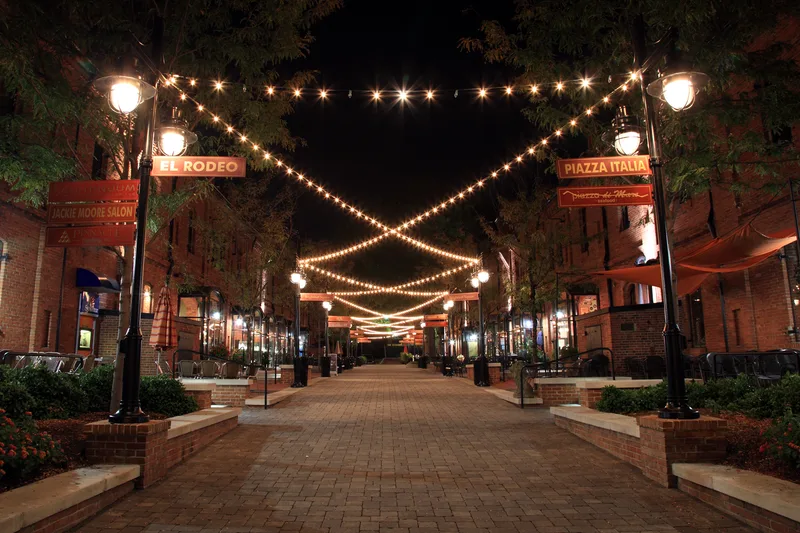
Bright Leaf Historic District is an industrial neighborhood of seventeen primary and twelve secondary buildings and structures on nine blocks, covering about thirty-four acres at the western edge of downtown Durham. Most of it was long part of the Liggett and Myers manufacturing plant. Tall brick warehouses and factories line city streets with little setback, giving the area a dense, urban character. The buildings fall into four phases. The oldest are the late-1870s B. L. Duke Warehouse and the 1884 Italianate cigarette factory designed by William H. Linthicum. Next come warehouses and processing buildings of 1897 to the 1910s with elaborate Romanesque Revival brickwork, built largely by the American Tobacco Company trust. Plainer buildings followed between 1920 and World War II, and austere postwar structures with Moderne entrances came last. The district records the growth of Durham's tobacco industry, from early Duke enterprises to cigarette manufacturing. It has kept a high level of integrity, with many buildings still in use or reused as offices and residences.
Machine-generated summary. This summary was generated by a language model from the official nomination document and has not been reviewed line by line by an editor. It may contain errors. Check the source document before relying on any detail. Source: nomination document (PDF) · catalog entry. Generated October 2026 (model claude-sonnet-5-5, prompt v1.0-2026-10-29).
| Styles | Italianate, Romanesque Revival, Moderne |
|---|---|
| Areas of significance | Architecture, Industry |
| Acreage | 34 |
| Boundary source | NPS cultural-resource GIS polygon |
| Full listing page | Bright Leaf Historic District (property record) |
What listing means for this property
This is a historic district. Buildings within its boundary are either contributing (they add to the district's significance) or non-contributing. Owners of contributing income-producing buildings can claim the 20% federal rehabilitation tax credit; homeowners should look at state credits. National Register districts impose no design review by themselves; a local historic district ordinance, if one exists, does (the difference explained).
General information, not legal or tax advice. Rules change; confirm with your State Historic Preservation Office or a qualified adviser.