Bodie Island Lifesaving/Coast Guard Station
Why it's listed
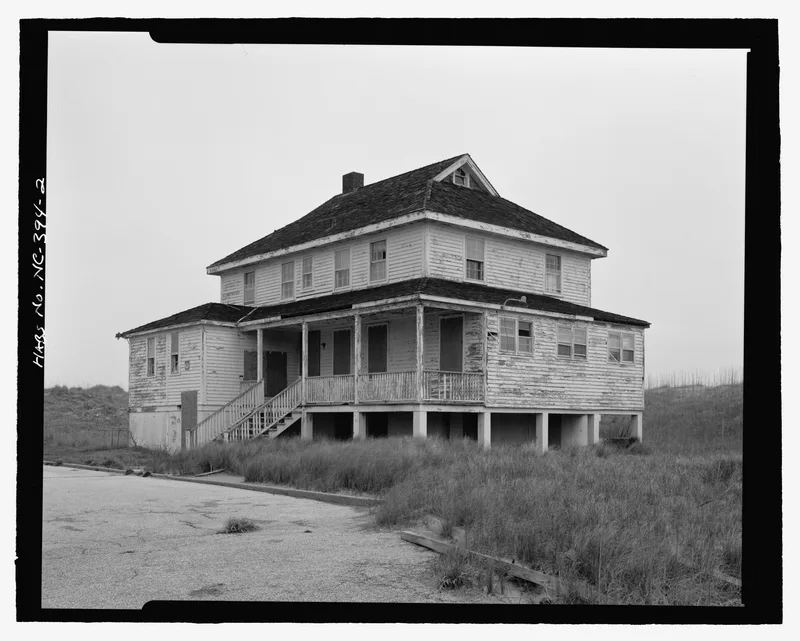
Bodie Island Lifesaving/Coast Guard Station is a small district of three historic structures on the Outer Banks near Nags Head, North Carolina. The original station was built in 1878 by Allen A. McCullough of Norfolk, Virginia, for $2,240, after the wreck of the steamship Metropolis showed that the stations built in 1874 stood too far apart. A keeper and six surfmen served there, and a separate boat house followed in 1903. Crews took part in dramatic rescues, including the 1894 wreck of the schooner Florence C. Magee. After the Coast Guard was formed in 1915, a second station building and an observation tower were added about 1925. The older station was moved in 1955 because of shoreline erosion and later became a residence, while the 1925 building serves as an office. The buildings were altered as their uses changed, but together they show the evolution of lifesaving stations at one site. The tower is rusting and close to the surf.
Machine-generated summary. This summary was generated by a language model from the official nomination document and has not been reviewed line by line by an editor. It may contain errors. Check the source document before relying on any detail. Source: nomination document (PDF) · catalog entry. Generated October 2026 (model claude-sonnet-5-5, prompt v1.0-2026-10-29).
| Period of significance | 1800-1899 |
|---|---|
| Areas of significance | Transportation, Social History |
| Acreage | 20 |
| Boundary source | NPS cultural-resource GIS polygon |
| Full listing page | Bodie Island Lifesaving/Coast Guard Station (property record) |
What listing means for this property
This is a historic district. Buildings within its boundary are either contributing (they add to the district's significance) or non-contributing. Owners of contributing income-producing buildings can claim the 20% federal rehabilitation tax credit; homeowners should look at state credits. National Register districts impose no design review by themselves; a local historic district ordinance, if one exists, does (the difference explained).
General information, not legal or tax advice. Rules change; confirm with your State Historic Preservation Office or a qualified adviser.