Biltmore Village Cottage District

The National Park Service has not published a boundary polygon for this district; the map shows the listed properties inside it and the district's reference point.
Why it's listed
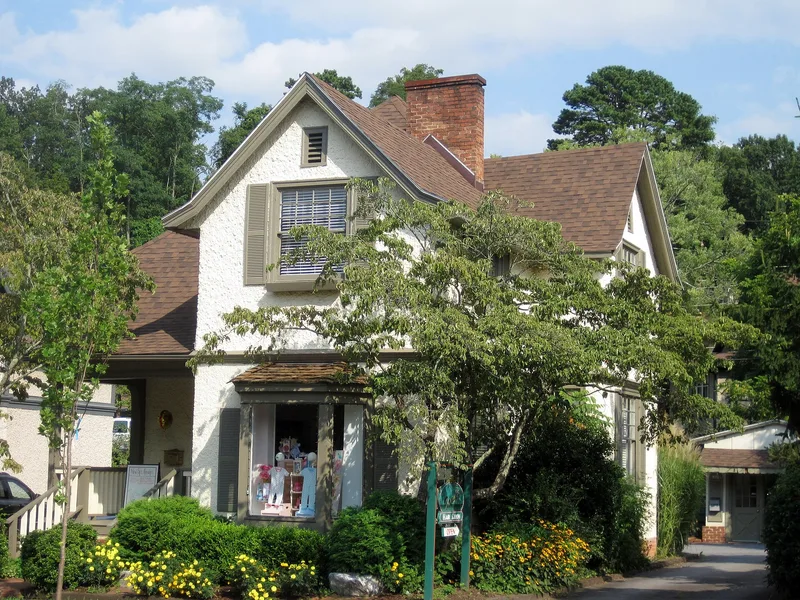
Fourteen cottages of pebbledash construction stand in the eastern part of Biltmore Village in Asheville, North Carolina, on Swan Street, All Souls Crescent and Boston Way. Richard Sharp Smith, an architect in Richard Morris Hunt's firm, designed them, and they date to about 1900. The one-and-one-half to two story houses have recessed porches, multiple gables, steeply pitched roofs and brick chimneys, and no two are exactly alike. Some have half-timbering, clipped gable dormers, shed dormers or gambrel roofs. The group is regarded as the largest surviving set of single-family cottages George W. Vanderbilt built in the village, and it reflects his plan for a manorial village near his Biltmore estate. Its association with Smith, who remained Vanderbilt's personal architect after Hunt's death in 1895, adds to its importance. The cottages are also valued as a large, consistent group of well-executed residential buildings within the village plan.
Machine-generated summary. This summary was generated by a language model from the official nomination document and has not been reviewed line by line by an editor. It may contain errors. Check the source document before relying on any detail. Source: nomination document (PDF) · catalog entry. Generated October 2026 (model claude-haiku-5-5, prompt v1.1-2026-10-29).
| Period of significance | ca. 1900 |
|---|---|
| Areas of significance | Community Planning and Development, Architecture |
| Acreage | 9.9 |
| Boundary source | not published |
| Full listing page | Biltmore Village Cottage District (property record) |
What listing means for this property
This is a historic district. Buildings within its boundary are either contributing (they add to the district's significance) or non-contributing. Owners of contributing income-producing buildings can claim the 20% federal rehabilitation tax credit; homeowners should look at state credits. National Register districts impose no design review by themselves; a local historic district ordinance, if one exists, does (the difference explained).
General information, not legal or tax advice. Rules change; confirm with your State Historic Preservation Office or a qualified adviser.