Balls Creek Campground

Why it's listed
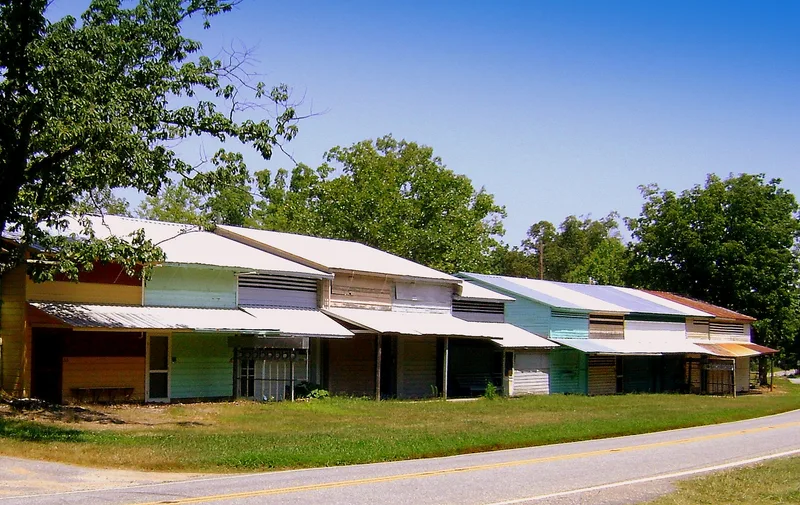
Balls Creek Campground is a 33.1-acre Methodist camp meeting site near Bandy's Crossroads in Catawba County, North Carolina. Area Methodists began holding meetings here in 1853, and the August revival has continued almost every year since, with pauses during the Civil War, in 1888 and during World War II. At the center is an open pole arbor, built around 1930 to replace an earlier one. Around it stand rows of narrow, gable-roofed wooden "tents" that share common walls and front on continuous covered walkways. The grounds also hold a circa 1940 store and a small jail. A fire in 1956 destroyed about 130 tents, most of which were rebuilt to traditional designs. The campground matters as a religious gathering place that drew up to 10,000 people at its closing sessions and as a social institution where families spent their vacations. Its arbor and tents also illustrate camp meeting architecture. The period of significance runs from 1853 to 1939.
Machine-generated summary. This summary was generated by a language model from the official nomination document and has not been reviewed line by line by an editor. It may contain errors. Check the source document before relying on any detail. Source: nomination document (PDF) · catalog entry. Generated October 2026 (model claude-sonnet-5-5, prompt v1.0-2026-10-29).
| Period of significance | 1853-1939 |
|---|---|
| Styles | Other: camp meeting site |
| Areas of significance | Architecture, Religion, Social History |
| Acreage | 31.1 |
| Boundary source | NPS cultural-resource GIS polygon |
| Full listing page | Balls Creek Campground (property record) |
What listing means for this property
This is a historic district. Buildings within its boundary are either contributing (they add to the district's significance) or non-contributing. Owners of contributing income-producing buildings can claim the 20% federal rehabilitation tax credit; homeowners should look at state credits. National Register districts impose no design review by themselves; a local historic district ordinance, if one exists, does (the difference explained).
General information, not legal or tax advice. Rules change; confirm with your State Historic Preservation Office or a qualified adviser.