Baldwin's Mill

Why it's listed
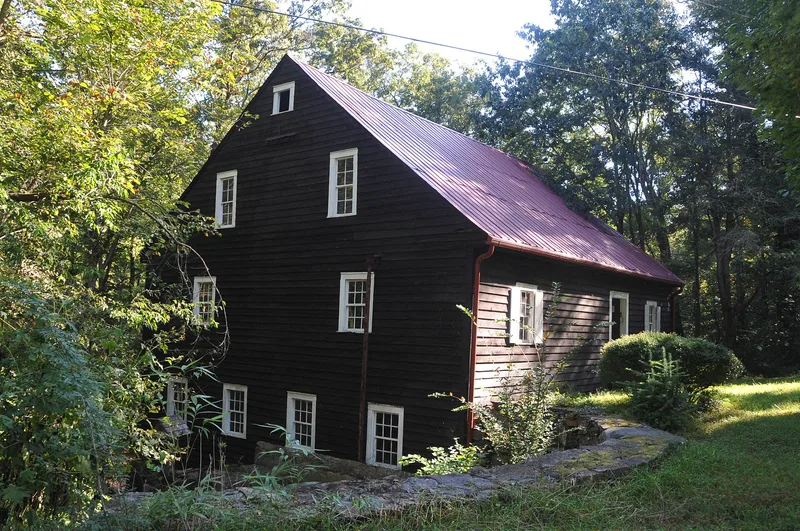
Baldwin's Mill is a water-powered grist mill on Terrells Creek in rural northern Chatham County, North Carolina. Its heavy timber frame, roughly thirty by forty feet, rests on a dry fieldstone foundation, and the dam and the mill and tail races are also of fieldstone. The mill was operating by 1807 and was bought in 1854 by Samuel Baldwin, a farmer, miller and Baptist clergyman. Around it grew a complex with a saw mill, cotton gin, blacksmith's shop and general store serving local farmers beside the Graham-to-Pittsboro road. Milling continued until the late 1920s, after which the buildings decayed. In 1941 a new owner repaired the structure, keeping the original appearance and most of the major timbers, and installed a steel overshot waterwheel to drive the millstones. That work was an early private preservation effort in the state. The mill is valued as one of few survivors of the many grist mills once found in the county, and the site may also hold archeological evidence.
Machine-generated summary. This summary was generated by a language model from the official nomination document and has not been reviewed line by line by an editor. It may contain errors. Check the source document before relying on any detail. Source: nomination document (PDF) · catalog entry. Generated October 2026 (model claude-sonnet-5-5, prompt v1.0-2026-10-29).
| Period of significance | 1807-1920s |
|---|---|
| Areas of significance | Architecture |
| Acreage | 10 |
| Boundary source | NPS cultural-resource GIS polygon |
| Full listing page | Baldwin's Mill (property record) |
What listing means for this property
This is a historic district. Buildings within its boundary are either contributing (they add to the district's significance) or non-contributing. Owners of contributing income-producing buildings can claim the 20% federal rehabilitation tax credit; homeowners should look at state credits. National Register districts impose no design review by themselves; a local historic district ordinance, if one exists, does (the difference explained).
General information, not legal or tax advice. Rules change; confirm with your State Historic Preservation Office or a qualified adviser.