Ardmore Historic District

Why it's listed
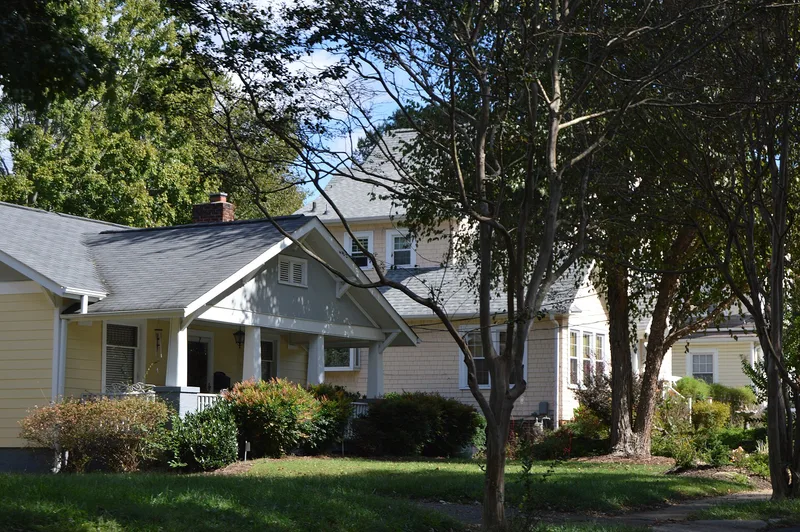
Ardmore is a large residential neighborhood roughly three miles southwest of downtown Winston-Salem. It contains more than 2,200 properties spread over about thirteen blocks by ten, and grew from at least ten platted developments laid out between 1910 and 1924. Three large apartment complexes were added between 1947 and 1951. Houses often sit above the street on rough granite or recycled-concrete retaining walls that respond to the rolling terrain, and several streets curve to follow the hills. Bungalows make up roughly a quarter of the housing, with more than three hundred in the Craftsman style. Colonial Revival houses, about fifty Dutch Colonial Revival examples, nearly one hundred Foursquares, Period Cottages and more than five hundred Minimal Traditional houses show how tastes changed from the 1910s into the 1950s. Churches, two schools, two parks, duplexes and detached garages complete the setting. The collection of intact housing from several decades is the basis for its listing.
Machine-generated summary. This summary was generated by a language model from the official nomination document and has not been reviewed line by line by an editor. It may contain errors. Check the source document before relying on any detail. Source: nomination document (PDF) · catalog entry. Generated October 2026 (model claude-sonnet-5-5, prompt v1.0-2026-10-29).
| Styles | Late Victorian: Queen Anne; Bungalow/Craftsman; Colonial Revival; Tudor Revival; Modern Movement: International Style; Mission/Spanish Colonial; Art Deco; Period Cottage; Minimal Traditional; Ranch |
|---|---|
| Areas of significance | Community Planning and Development, Architecture |
| Acreage | 600 |
| Boundary source | NPS cultural-resource GIS polygon |
| Full listing page | Ardmore Historic District (property record) |
What listing means for this property
This is a historic district. Buildings within its boundary are either contributing (they add to the district's significance) or non-contributing. Owners of contributing income-producing buildings can claim the 20% federal rehabilitation tax credit; homeowners should look at state credits. National Register districts impose no design review by themselves; a local historic district ordinance, if one exists, does (the difference explained).
General information, not legal or tax advice. Rules change; confirm with your State Historic Preservation Office or a qualified adviser.