American Tobacco Company Manufacturing Plant

Why it's listed
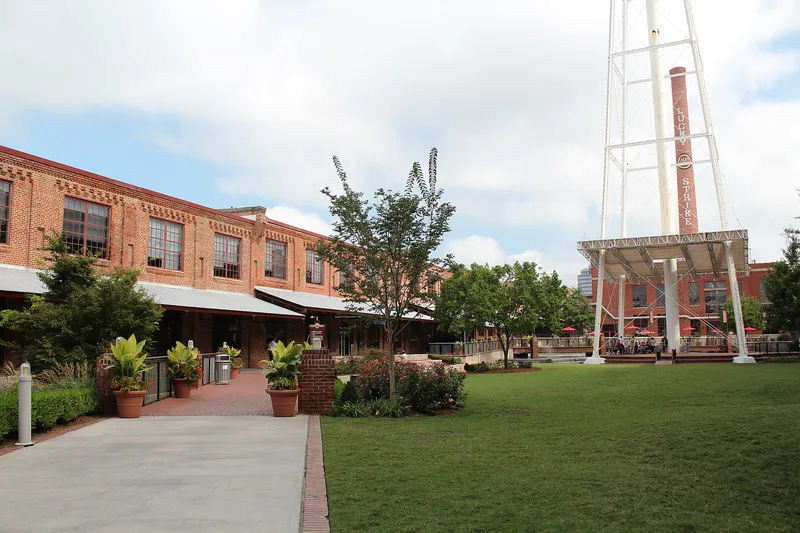
Occupying one long block in downtown Durham, this tobacco manufacturing complex shows about eighty years of industrial building in a single streetscape. At its north end stands the Italianate W. T. Blackwell & Company Factory, begun in 1874 for the makers of Bull Durham smoking tobacco. Toward the middle are warehouses and factories from about 1900 to 1907, built by the American Tobacco Company in slow-burn construction with Romanesque Revival brickwork such as dogtooth courses, machicolation and corbelling. The south end holds large Moderne factories from 1939, 1946 and 1953-54, with concrete frames and brick curtain walls. A power plant with a Lucky Strike chimney and a painted water tower add to the skyline. The complex records the growth of Blackwell and Company, the American Tobacco Company trust formed by James B. Duke, and the reorganized company after 1911. Fourteen resources contribute to the district, which is now vacant.
Machine-generated summary. This summary was generated by a language model from the official nomination document and has not been reviewed line by line by an editor. It may contain errors. Check the source document before relying on any detail. Source: nomination document (PDF) · catalog entry. Generated October 2026 (model claude-sonnet-5-5, prompt v1.0-2026-10-29).
| Period of significance | 1874-1954 |
|---|---|
| Styles | Italianate, Romanesque Revival, Moderne, No Style |
| Areas of significance | Industry, Architecture |
| Acreage | 14.6 |
| Boundary source | NPS cultural-resource GIS polygon |
| Full listing page | American Tobacco Company Manufacturing Plant (property record) |
What listing means for this property
This is a historic district. Buildings within its boundary are either contributing (they add to the district's significance) or non-contributing. Owners of contributing income-producing buildings can claim the 20% federal rehabilitation tax credit; homeowners should look at state credits. National Register districts impose no design review by themselves; a local historic district ordinance, if one exists, does (the difference explained).
Noted as vacant in the nomination. Nomination documents can be decades old; current status may differ. If you are considering buying an empty listed property, read the due-diligence checklist.
General information, not legal or tax advice. Rules change; confirm with your State Historic Preservation Office or a qualified adviser.