Wyoming Village Historic District

Why it's listed
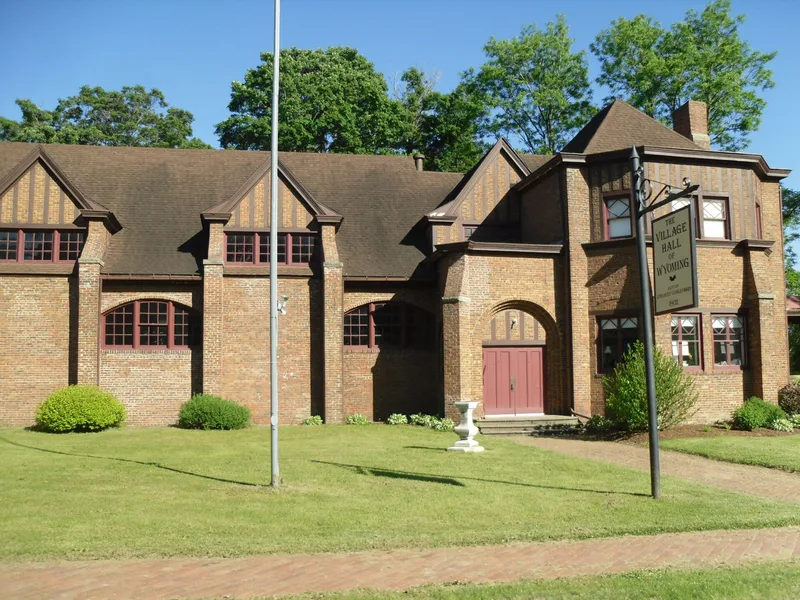
Wyoming village in western New York grew from a settlement begun in 1809 by Silas Newell, a New England migrant, and was laid out in a T-shape around a small triangular green. The historic district takes in about seventy structures along Main and Academy Streets, including an 1838 inn, a turn-of-the-century bank, the 1830 Presbyterian Church, Federal and Greek Revival houses, and later Victorian and Gothic cottages and churches. Middlebury Academy, an early brick landmark, drew students from across the state and supported the village economy through the 1860s. Around 1900 the family at nearby "Hillside" took an active interest in village life. Their gifts in 1902 were the brick Fire Tower and a French provincial style Village Hall. Visitors to the family included suffrage leaders such as Susan B. Anthony. The nomination presents the village as a rural place where plain vernacular building and wider cultural influences developed side by side.
Machine-generated summary. This summary was generated by a language model from the official nomination document and has not been reviewed line by line by an editor. It may contain errors. Check the source document before relying on any detail. Source: nomination document (PDF) · catalog entry. Generated October 2026 (model claude-sonnet-5-5, prompt v1.0-2026-10-29).
| Period of significance | 19th and 20th centuries (specific dates not given) |
|---|---|
| Styles | Federal, Greek Revival, Victorian, Gothic, and French provincial buildings in a New England-style village plan |
| Areas of significance | Community Planning and Development, Education, Architecture, Social History |
| Acreage | 45 |
| Boundary source | NPS cultural-resource GIS polygon |
| Full listing page | Wyoming Village Historic District (property record) |
What listing means for this property
This is a historic district. Buildings within its boundary are either contributing (they add to the district's significance) or non-contributing. Owners of contributing income-producing buildings can claim the 20% federal rehabilitation tax credit; homeowners should look at state credits. National Register districts impose no design review by themselves; a local historic district ordinance, if one exists, does (the difference explained).
General information, not legal or tax advice. Rules change; confirm with your State Historic Preservation Office or a qualified adviser.