Wyandanch Club Historic District

Why it's listed
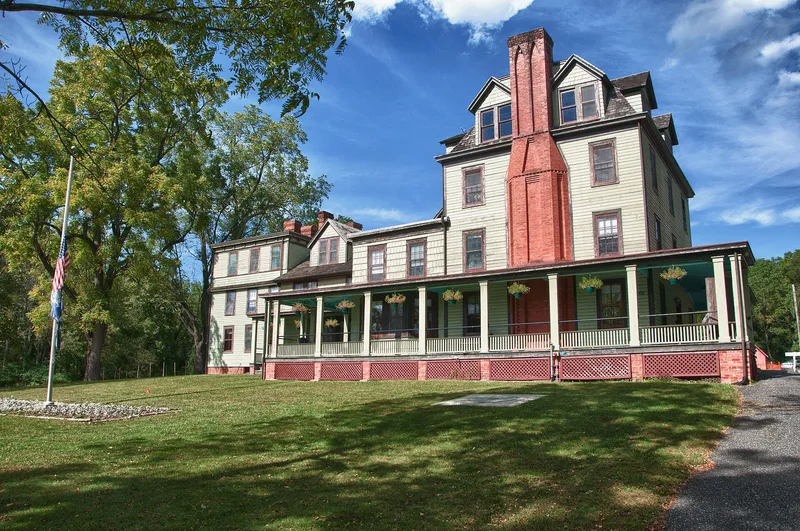
Within Caleb Smith State Park in Smithtown, Long Island, a cluster of farmhouses, outbuildings and a grist mill records how the land was used from the eighteenth century into the early twentieth. The district holds twelve contributing buildings in four clusters: the Vail House, the Chipman House and mill, the Caleb Smith I House (later the Wyandanch Clubhouse), and the Whitman farm. Most are wood-framed and shingled, typical of Long Island, and many keep original interior plans and detailing. The land was long held by the Smith family until the Wyandanch Club began buying it in 1889. The club kept the naturalistic setting, enlarged and altered buildings for fishing and hunting, and used the property until the State of New York bought it in 1963. About five percent of the district is developed; the rest is woodland, ponds, wetlands and part of the Nissequogue River. Twelve small modern buildings do not contribute.
Machine-generated summary. This summary was generated by a language model from the official nomination document and has not been reviewed line by line by an editor. It may contain errors. Check the source document before relying on any detail. Source: nomination document (PDF) · catalog entry. Generated October 2026 (model claude-sonnet-5-5, prompt v1.0-2026-10-29).
| Period of significance | circa 1751-1912 |
|---|---|
| Styles | Colonial/English; Late Victorian/Queen Anne |
| Areas of significance | Commerce, Agriculture, Entertainment/Recreation, Architecture |
| Acreage | 518 |
| Boundary source | NPS cultural-resource GIS polygon |
| Full listing page | Wyandanch Club Historic District (property record) |
What listing means for this property
This is a historic district. Buildings within its boundary are either contributing (they add to the district's significance) or non-contributing. Owners of contributing income-producing buildings can claim the 20% federal rehabilitation tax credit; homeowners should look at state credits. National Register districts impose no design review by themselves; a local historic district ordinance, if one exists, does (the difference explained).
General information, not legal or tax advice. Rules change; confirm with your State Historic Preservation Office or a qualified adviser.