Waterville Triangle Historic District

Why it's listed
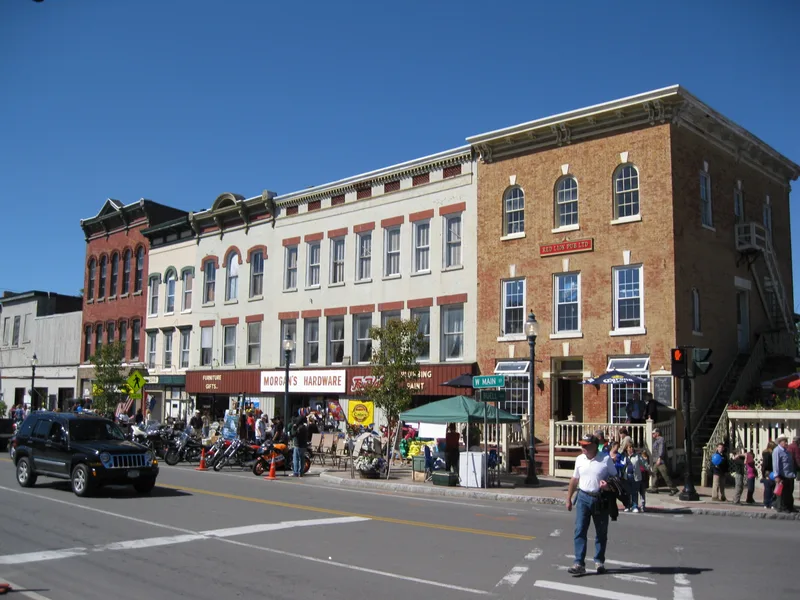
Waterville's central triangle, formed by Main Street, Stafford Avenue and White Street, is a district of about 27 acres holding commercial blocks, churches and houses built between roughly 1820 and 1900. Brick commercial buildings with Italianate cornices cluster at the point of the triangle, while churches and fine residences line East Main Street. The buildings reflect the wealth the hop industry brought to the village. Waterville became a national hop exchange and shipping point, and the railroad arrived in 1867. Notable buildings include the 1873 First Presbyterian Church by Archimedes Russell, Grace Episcopal Church by Thomas S. Jackson, the Federal-style Baptist Church and Locke House, the 1869 Woodman bank building, and the Italian villa at 104 White Street based on an Andrew Jackson Downing design. Several sources describe many structures as keeping their pattern-book character. A few modern gas stations and stores are noted as intrusions, but the grouping is judged of exceptional local significance.
Machine-generated summary. This summary was generated by a language model from the official nomination document and has not been reviewed line by line by an editor. It may contain errors. Check the source document before relying on any detail. Source: nomination document (PDF) · catalog entry. Generated October 2026 (model claude-sonnet-5-5, prompt v1.0-2026-10-29).
| Period of significance | 1800-1899 |
|---|---|
| Styles | Mixed nineteenth-century styles: Federal, Italianate, Gothic Revival, Italian villa, Victorian Gothic |
| Areas of significance | Commerce, Architecture |
| Acreage | 27 |
| Boundary source | NPS cultural-resource GIS polygon |
| Full listing page | Waterville Triangle Historic District (property record) |
What listing means for this property
This is a historic district. Buildings within its boundary are either contributing (they add to the district's significance) or non-contributing. Owners of contributing income-producing buildings can claim the 20% federal rehabilitation tax credit; homeowners should look at state credits. National Register districts impose no design review by themselves; a local historic district ordinance, if one exists, does (the difference explained).
General information, not legal or tax advice. Rules change; confirm with your State Historic Preservation Office or a qualified adviser.