Waterford Village Historic District

Why it's listed
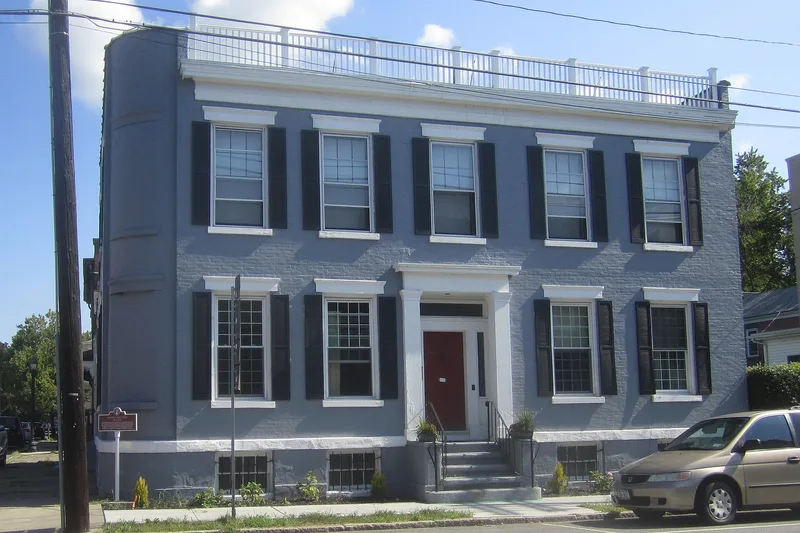
Waterford Village Historic District takes in more than half of the incorporated village where the Hudson and Mohawk Rivers meet in Saratoga County, New York. It holds a complete community: mansions and factory workers' homes, churches, schools, government buildings, commercial blocks, mills and transportation structures. Broad Street forms the business center, with almost a dozen brick Federal buildings with stepped gables. Third Street includes the 1896 Robert Reis and Company mill with its corbeled brick tower, and nearby streets hold homes built by local industrialists. The village was first settled around 1633 and incorporated in 1794. Its waterpower, river trade and position as the southern terminus of the Champlain Canal around 1825 drove growth and the construction of fine homes, mills, churches and shops. Because that growth spanned changing tastes, the district blends Federal, Georgian, Empire, Greek Revival and early Victorian styles, held together by modest scale and closely spaced buildings on narrow streets.
Machine-generated summary. This summary was generated by a language model from the official nomination document and has not been reviewed line by line by an editor. It may contain errors. Check the source document before relying on any detail. Source: nomination document (PDF) · catalog entry. Generated October 2026 (model claude-sonnet-5-5, prompt v1.0-2026-10-29).
| Styles | Mixed 19th and early 20th-century styles, including Federal, Georgian, Empire, Greek Revival and early Victorian |
|---|---|
| Areas of significance | Industry, Commerce, Transportation, Architecture, Invention |
| Acreage | 31 |
| Boundary source | NPS cultural-resource GIS polygon |
| Full listing page | Waterford Village Historic District (property record) |
What listing means for this property
This is a historic district. Buildings within its boundary are either contributing (they add to the district's significance) or non-contributing. Owners of contributing income-producing buildings can claim the 20% federal rehabilitation tax credit; homeowners should look at state credits. National Register districts impose no design review by themselves; a local historic district ordinance, if one exists, does (the difference explained).
General information, not legal or tax advice. Rules change; confirm with your State Historic Preservation Office or a qualified adviser.