Water, Wall, and Pine Streets Lenticular Truss Bridges

Why it's listed
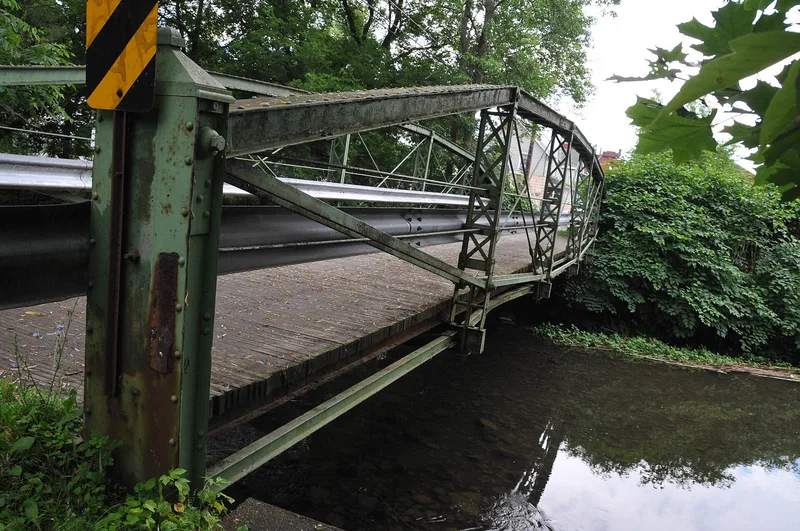
Three iron bridges carry Water, Wall and Pine Streets across the Tioughnioga River in Homer, New York, forming a small district that also takes in parts of the approach streets and the river between them. In 1881 the village trustees, wanting a safer and more convenient way across the river, ordered the bridges from a Connecticut firm, the Corrugated Metal Co. of East Berlin, and paid $2,800 for all three. Each uses a lenticular truss, with a bowed upper chord and a lens-shaped lower chord of wrought iron bars. The Wall Street span measures 58 feet and the Pine Street span 71 feet. The Water Street bridge, at 97 feet, uses two trusses that meet on a stone wall. Finial-capped posts decorate the structures. They are valued as examples of inventive iron bridge design and as links in an old trade route. They remain in use, although maintenance has been neglected and the Water Street bridge faces possible demolition.
Machine-generated summary. This summary was generated by a language model from the official nomination document and has not been reviewed line by line by an editor. It may contain errors. Check the source document before relying on any detail. Source: nomination document (PDF) · catalog entry. Generated October 2026 (model claude-sonnet-5-5, prompt v1.0-2026-10-29).
| Period of significance | 1800-1899 |
|---|---|
| Styles | Lenticular truss bridges (iron lenticular pony truss) |
| Areas of significance | Engineering, Transportation |
| Acreage | 6.2 |
| Boundary source | NPS cultural-resource GIS polygon |
| Full listing page | Water, Wall, and Pine Streets Lenticular Truss Bridges (property record) |
What listing means for this property
This is a historic district. Buildings within its boundary are either contributing (they add to the district's significance) or non-contributing. Owners of contributing income-producing buildings can claim the 20% federal rehabilitation tax credit; homeowners should look at state credits. National Register districts impose no design review by themselves; a local historic district ordinance, if one exists, does (the difference explained).
General information, not legal or tax advice. Rules change; confirm with your State Historic Preservation Office or a qualified adviser.