Walnut Street Historic District

Why it's listed
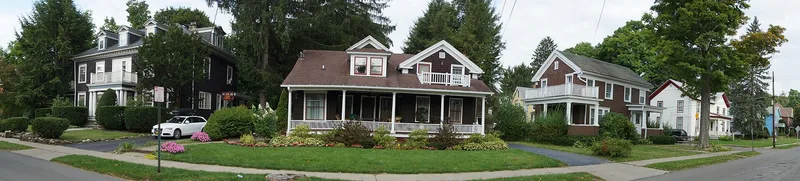
Walnut Street Historic District is a residential area in the center of Oneonta, the largest city in Otsego County, New York. It includes the whole length of Walnut Street and chosen properties on Dietz Street, Ford Avenue, Elm Street and Maple Street. The district has forty-six primary structures, nearly all houses built between about 1850 and 1915. Styles include Greek Revival, Italianate cottages, Second Empire, Queen Anne, Shingle Style, Romanesque, Chateauesque and several Neo-Classical Revival designs. Grander houses sit at the corners, and at Walnut and Dietz each corner shows a different style. Maple and elm trees line the street, which is the widest in the city. The homes reflect Oneonta's growth from a rural village into a prosperous city and marketing center, and many were built for influential local business people. About twelve houses have been converted to apartments, offices, a nursing home, a fraternity house and a convent, mostly keeping their original character. Parking and commercial pressure from Main Street prompted the listing.
Machine-generated summary. This summary was generated by a language model from the official nomination document and has not been reviewed line by line by an editor. It may contain errors. Check the source document before relying on any detail. Source: nomination document (PDF) · catalog entry. Generated October 2026 (model claude-sonnet-5-5, prompt v1.0-2026-10-29).
| Period of significance | 1850-1915 |
|---|---|
| Styles | Victorian and Neo-Classical Revival styles, including Greek Revival, Italianate, Second Empire, Queen Anne, Shingle Style, Romanesque and Chateauesque |
| Areas of significance | Industry, Commerce, Transportation, Education, Law, Politics/Government, Architecture |
| Acreage | 13 |
| Boundary source | NPS cultural-resource GIS polygon |
| Full listing page | Walnut Street Historic District (property record) |
What listing means for this property
This is a historic district. Buildings within its boundary are either contributing (they add to the district's significance) or non-contributing. Owners of contributing income-producing buildings can claim the 20% federal rehabilitation tax credit; homeowners should look at state credits. National Register districts impose no design review by themselves; a local historic district ordinance, if one exists, does (the difference explained).
General information, not legal or tax advice. Rules change; confirm with your State Historic Preservation Office or a qualified adviser.