Vosburg Turning Mill Complex

The National Park Service has not published a boundary polygon for this district; the map shows the listed properties inside it and the district's reference point.
Why it's listed
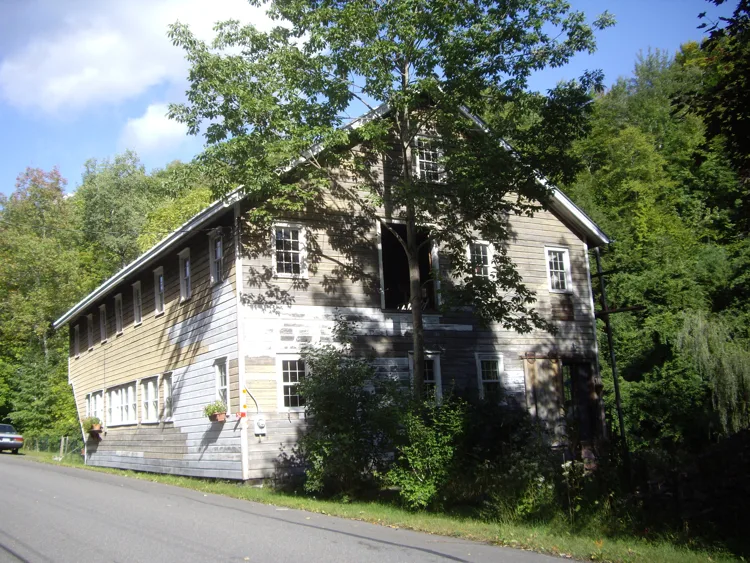
A wood turning mill built in 1899 anchors this small district in Shady, in the town of Woodstock, Ulster County. James Vosburg bought the site and water rights in 1859 and built a first mill, which burned in 1897. He and his sons then built the present two-story, L-shaped heavy timber building, which made bed posts, chair legs, rolling pins, children's blocks, baseball bats and other turned goods. Water powered the mill through an overshot wheel, and the original twenty by five foot steel wheel survives in the wheel room along with cast iron heating equipment and hydropower parts. The mill ran into the 1950s and became a seasonal residence in 1965. The district also includes the James Vosburg house with its ornate turned and sawn porch, a barn, a small workers' cottage and the ruined mill dam. Its significance rests on the high integrity of this rural industrial complex and its setting. Creek erosion since the 1970s threatens the mill's foundation.
Machine-generated summary. This summary was generated by a language model from the official nomination document and has not been reviewed line by line by an editor. It may contain errors. Check the source document before relying on any detail. Source: nomination document (PDF) · catalog entry. Generated October 2026 (model claude-sonnet-5-5, prompt v1.0-2026-10-29).
| Period of significance | 1899-ca.1955 |
|---|---|
| Styles | Rural vernacular (classified as "Other") |
| Areas of significance | Engineering, Architecture, Commerce, Industry |
| Acreage | 5 |
| Boundary source | not published |
| Full listing page | Vosburg Turning Mill Complex (property record) |
What listing means for this property
This is a historic district. Buildings within its boundary are either contributing (they add to the district's significance) or non-contributing. Owners of contributing income-producing buildings can claim the 20% federal rehabilitation tax credit; homeowners should look at state credits. National Register districts impose no design review by themselves; a local historic district ordinance, if one exists, does (the difference explained).
General information, not legal or tax advice. Rules change; confirm with your State Historic Preservation Office or a qualified adviser.