Vischer Ferry Historic District

Why it's listed
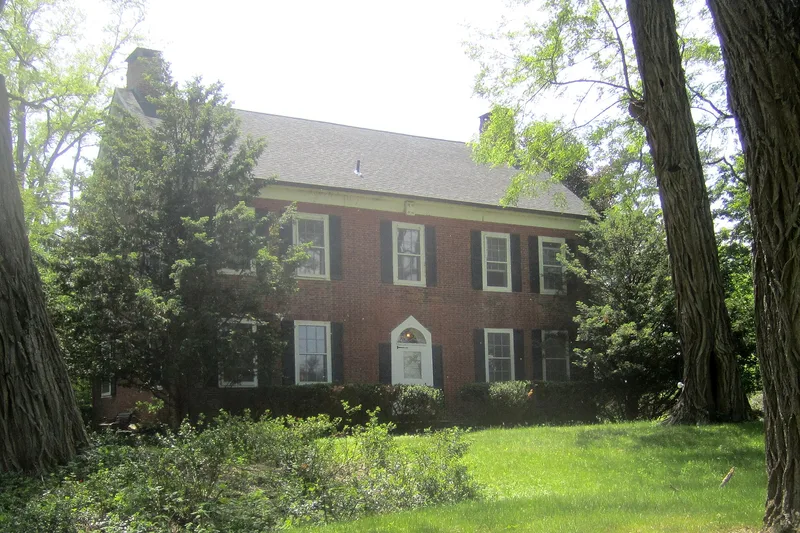
Vischer Ferry is a small canal-era hamlet on the north bank of the Mohawk River in Clifton Park, about four miles east of Schenectady. Dutch settlers from Albany and Schenectady first came in the 1670s, and the community grew through a ferry period, a canal period and a later resort period. The Erie Canal, still holding water, runs through the district. Its enlargement in the 1840s set off a burst of building, and two dry docks drew boat builders and ship carpenters who put up the Greek Revival houses that define the place. Seven are temple-form residences with pillared porticoes. Earlier buildings include a brick Federal farmhouse dated 1806 with a rear wing said to be mid-18th century. Later additions include a Queen Anne house, Gothic-influenced buildings and a church with Tiffany windows. Of 64 buildings, only seventeen date from after the 1930s. The hamlet was listed because it survives so intact, with little modern intrusion, despite nearby suburban growth.
Machine-generated summary. This summary was generated by a language model from the official nomination document and has not been reviewed line by line by an editor. It may contain errors. Check the source document before relying on any detail. Source: nomination document (PDF) · catalog entry. Generated October 2026 (model claude-sonnet-5-5, prompt v1.0-2026-10-29).
| Styles | Greek Revival (predominant), with Federal, Gothic and Queen Anne elements |
|---|---|
| Areas of significance | Transportation, Exploration/Settlement, Architecture |
| Acreage | 1594 |
| Boundary source | NPS cultural-resource GIS polygon |
| Full listing page | Vischer Ferry Historic District (property record) |
What listing means for this property
This is a historic district. Buildings within its boundary are either contributing (they add to the district's significance) or non-contributing. Owners of contributing income-producing buildings can claim the 20% federal rehabilitation tax credit; homeowners should look at state credits. National Register districts impose no design review by themselves; a local historic district ordinance, if one exists, does (the difference explained).
General information, not legal or tax advice. Rules change; confirm with your State Historic Preservation Office or a qualified adviser.