Village Park Historic District (Boundary Increase)

Why it's listed
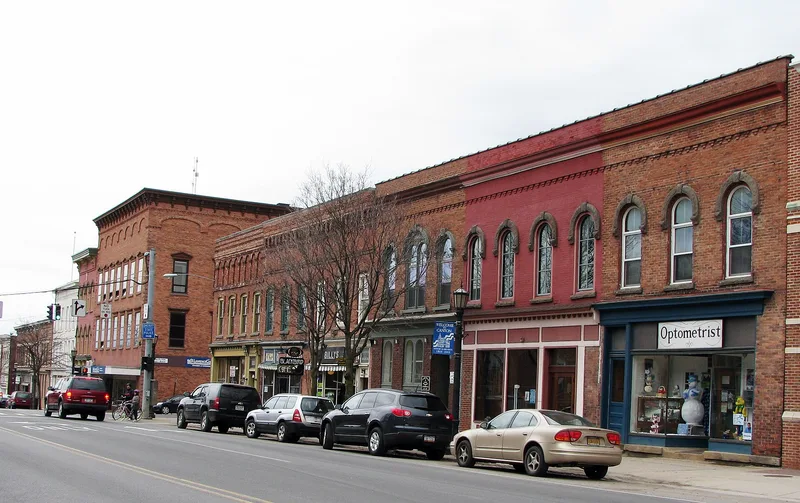
This addition to Canton's Village Park Historic District extends the protected area west along Main Street toward the Grasse River. It takes in the whole north side of Main Street from Court Street to Riverside Drive and four commercial buildings on the south side, 32 structures in all, built between about 1870 and 1924. Most are two-story brick blocks with flat roofs and Italianate detailing, rebuilt largely in the 1870s and 1880s after a series of fires. Shops occupy the ground floors, with apartments or meeting halls above. On the south side, one Italianate building is wooden, and a 1921 theater and a 1924 Classical bank stand out among the others. The added blocks match the scale, materials and decoration of the original district and continue its streetscape. Together they show Canton's role as county seat and as the commercial and social center for the surrounding rural area. Despite fires and altered storefronts, the buildings still convey the nineteenth-century business community of this small village.
Machine-generated summary. This summary was generated by a language model from the official nomination document and has not been reviewed line by line by an editor. It may contain errors. Check the source document before relying on any detail. Source: nomination document (PDF) · catalog entry. Generated October 2026 (model claude-sonnet-5-5, prompt v1.0-2026-10-29).
| Period of significance | 1870-1924 |
|---|---|
| Styles | Italianate commercial buildings, with an eclectic style theater (1921) and a Classical style bank (1924) |
| Areas of significance | Commerce, Architecture |
| Acreage | 16 |
| Boundary source | NPS cultural-resource GIS polygon |
| Full listing page | Village Park Historic District (Boundary Increase) (property record) |
What listing means for this property
This is a historic district. Buildings within its boundary are either contributing (they add to the district's significance) or non-contributing. Owners of contributing income-producing buildings can claim the 20% federal rehabilitation tax credit; homeowners should look at state credits. National Register districts impose no design review by themselves; a local historic district ordinance, if one exists, does (the difference explained).
General information, not legal or tax advice. Rules change; confirm with your State Historic Preservation Office or a qualified adviser.