Usonia Historic District

Why it's listed
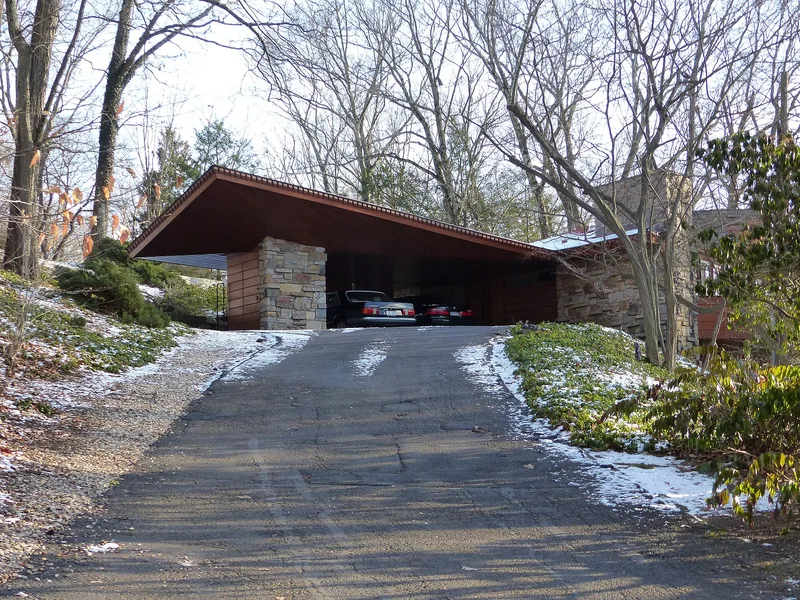
Usonia is a wooded residential community in northeastern Westchester County, New York, built by a cooperative that bought ninety-seven acres in 1946. Frank Lloyd Wright prepared the site plan, which David Henken and Aaron Resnick modestly revised with his approval. Fifty-five circular one-acre building sites were first proposed, later reshaped into fewer, slightly larger lots, while the land between them stayed wooded and held in common. Houses were built from 1949 to 1964, and most went up before 1955. Wright designed three, Henken thirteen and Resnick another thirteen, with the rest by other architects. Typical houses are long and low, with concrete slabs, radiant floor heating, stone or brick chimneys, horizontal cypress siding, deep eaves, carports and terraces that connect indoor and outdoor space. Narrow roads follow the contours, fences are not allowed, and native plantings blur property lines. The district is recognized for this combination of planned landscape and organic architecture, which has kept a high degree of integrity.
Machine-generated summary. This summary was generated by a language model from the official nomination document and has not been reviewed line by line by an editor. It may contain errors. Check the source document before relying on any detail. Source: nomination document (PDF) · catalog entry. Generated October 2026 (model claude-sonnet-5-5, prompt v1.0-2026-10-29).
| Styles | Modern (Usonian, organic architecture) |
|---|---|
| Areas of significance | Community Planning and Development, Architecture, Landscape Architecture |
| Acreage | 95.1 |
| Boundary source | NPS cultural-resource GIS polygon |
| Full listing page | Usonia Historic District (property record) |
What listing means for this property
This is a historic district. Buildings within its boundary are either contributing (they add to the district's significance) or non-contributing. Owners of contributing income-producing buildings can claim the 20% federal rehabilitation tax credit; homeowners should look at state credits. National Register districts impose no design review by themselves; a local historic district ordinance, if one exists, does (the difference explained).
General information, not legal or tax advice. Rules change; confirm with your State Historic Preservation Office or a qualified adviser.