United States Oval Historic District

Why it's listed
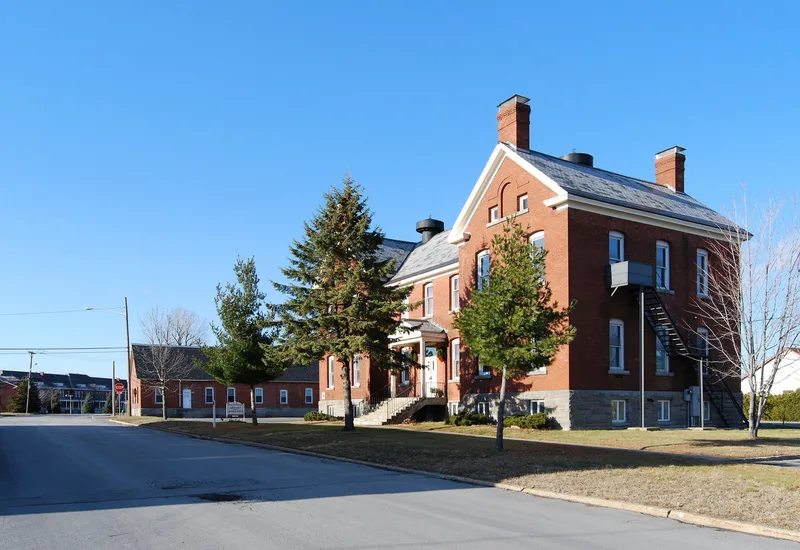
Brick barracks, officers' quarters, a hospital, a chapel and a bandstand surround a broad parade ground in southeast Plattsburgh, on the grounds of Plattsburgh Air Force Base. The district covers 53 acres and holds 27 contributing features built between 1893 and 1934 for the former Plattsburgh Barracks, which the U.S. Army occupied from 1814 to 1944. Its most prominent elements are two large 1893 brick barracks and a symmetrical row of 16 brick double houses for officers, finished by 1897. Earlier buildings show Romanesque influence, while later ones, such as the 1934 barracks, use Georgian Revival details. The post guarded Lake Champlain and the northern frontier, and in 1915 it hosted the first reserve officer training camp, which produced the "Plattsburgh Idea" of citizen-soldier preparedness. The district is valued for its combined effect and its integrity of design and materials, with few exterior changes and many buildings still in use.
Machine-generated summary. This summary was generated by a language model from the official nomination document and has not been reviewed line by line by an editor. It may contain errors. Check the source document before relying on any detail. Source: nomination document (PDF) · catalog entry. Generated October 2026 (model claude-sonnet-5-5, prompt v1.0-2026-10-29).
| Period of significance | 1893-1934 |
|---|---|
| Styles | Romanesque influence in the earlier buildings; Georgian Revival and eclectic details in the later ones |
| Areas of significance | Military, Architecture |
| Acreage | 53 |
| Boundary source | NPS cultural-resource GIS polygon |
| Full listing page | United States Oval Historic District (property record) |
What listing means for this property
This is a historic district. Buildings within its boundary are either contributing (they add to the district's significance) or non-contributing. Owners of contributing income-producing buildings can claim the 20% federal rehabilitation tax credit; homeowners should look at state credits. National Register districts impose no design review by themselves; a local historic district ordinance, if one exists, does (the difference explained).
General information, not legal or tax advice. Rules change; confirm with your State Historic Preservation Office or a qualified adviser.