Union Street Historic District

Why it's listed
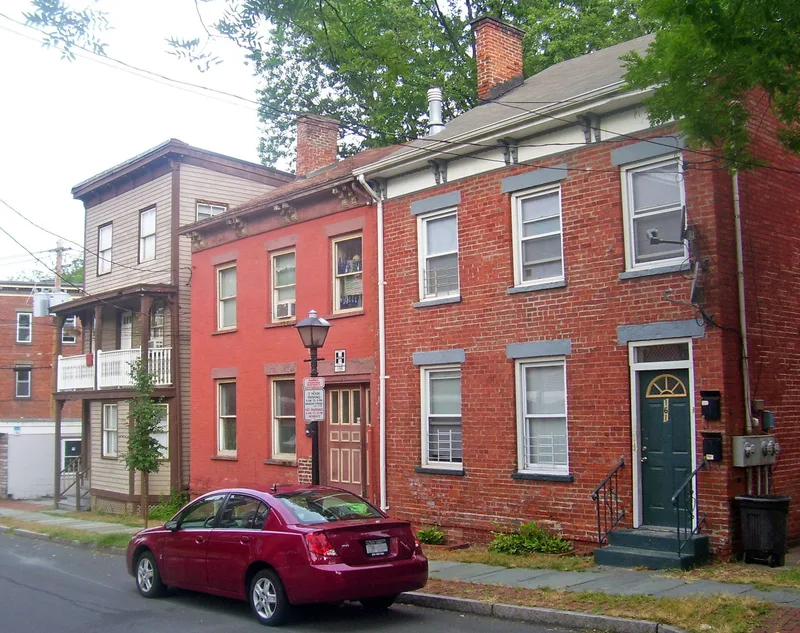
Union Street Historic District covers about eight blocks of downtown Poughkeepsie, New York, on a slope above the Hudson River. Union Street, its backbone, began as a footpath to the Union Store on the river and became the first road to the water in 1767. The district holds about 173 historic structures, mostly two- or three-story brick houses on long, narrow lots. A single house plan, two and one-half stories with a three-bay facade, repeats from the Federal period through the Victorian era, built first in brick with stone trim, then in wood, then in more elaborate brickwork. Larger buildings, some with ground-floor shops, mark the angled street intersections. The area was listed as the oldest remaining section of the city and as a well preserved nineteenth-century working-class neighborhood. German, Irish, Polish, Italian, Slavic and Black residents have each settled here in turn. Arterial highways and urban renewal clearance have left the district isolated.
Machine-generated summary. This summary was generated by a language model from the official nomination document and has not been reviewed line by line by an editor. It may contain errors. Check the source document before relying on any detail. Source: nomination document (PDF) · catalog entry. Generated October 2026 (model claude-sonnet-5-5, prompt v1.0-2026-10-29).
| Styles | Federal through Victorian; a repeated two-and-one-half story, three-bay house plan in brick with stone trim, then wood, then more elaborate brickwork |
|---|---|
| Areas of significance | Architecture, Religion, Social History |
| Boundary source | NPS cultural-resource GIS polygon |
| Full listing page | Union Street Historic District (property record) |
What listing means for this property
This is a historic district. Buildings within its boundary are either contributing (they add to the district's significance) or non-contributing. Owners of contributing income-producing buildings can claim the 20% federal rehabilitation tax credit; homeowners should look at state credits. National Register districts impose no design review by themselves; a local historic district ordinance, if one exists, does (the difference explained).
General information, not legal or tax advice. Rules change; confirm with your State Historic Preservation Office or a qualified adviser.