Union Avenue Historic District

Why it's listed
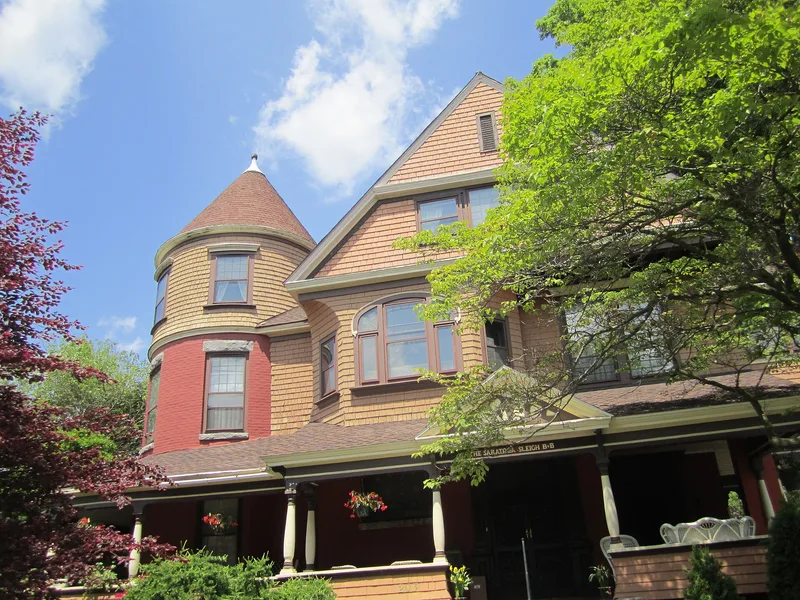
Union Avenue in Saratoga Springs, New York, is a broad, tree-lined street running about a mile and a half east from Congress Park to the Adirondack Northway. Large Victorian mansions with towers, turrets, verandas and shingled or half-timbered detail line the street, and fourteen are described as classic Queen Anne examples. Others show colonial or Italianate details. The district also includes the Saratoga Race Track, whose turreted grandstand and more than 200 structures date from 1864 onward. It ends at Yaddo, a castellated stone mansion built in 1892 by Spencer and Katrina Trask, which became an artists' retreat. The avenue developed as a seasonal resort for the socially prominent, and prosperity from the track supported its houses. Skidmore College later took over many homes as dormitories and classrooms. The district was listed for its architecture, the history of American horse racing, and the artistic legacy of Yaddo. Six buildings are noted as intrusions.
Machine-generated summary. This summary was generated by a language model from the official nomination document and has not been reviewed line by line by an editor. It may contain errors. Check the source document before relying on any detail. Source: nomination document (PDF) · catalog entry. Generated October 2026 (model claude-sonnet-5-5, prompt v1.0-2026-10-29).
| Period of significance | 1800-1899 and 1900- (the 1800s and 1900s boxes are checked) |
|---|---|
| Styles | Queen Anne, with Colonial Revival, Mansard, Italianate, Romanesque and High Victorian Gothic examples |
| Areas of significance | Architecture, Social History |
| Acreage | 610 |
| Boundary source | NPS cultural-resource GIS polygon |
| Full listing page | Union Avenue Historic District (property record) |
What listing means for this property
This is a historic district. Buildings within its boundary are either contributing (they add to the district's significance) or non-contributing. Owners of contributing income-producing buildings can claim the 20% federal rehabilitation tax credit; homeowners should look at state credits. National Register districts impose no design review by themselves; a local historic district ordinance, if one exists, does (the difference explained).
General information, not legal or tax advice. Rules change; confirm with your State Historic Preservation Office or a qualified adviser.