Ulster and Delaware Railroad Depot and Mill Complex

The National Park Service has not published a boundary polygon for this district; the map shows the listed properties inside it and the district's reference point.
Why it's listed
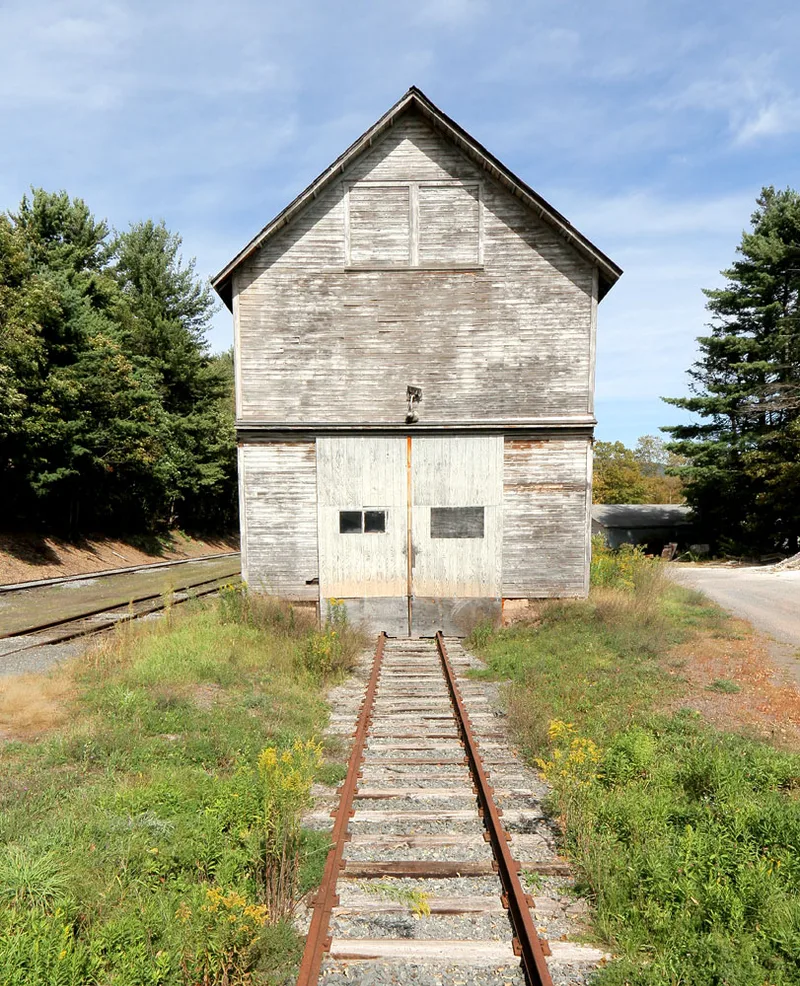
Along the tracks at the western edge of Roxbury, in New York's Catskill Mountain region, stands a group of five buildings tied to the Ulster and Delaware Railroad: a combined passenger and freight depot, a steam flour and feed mill, a creamery, an ice house and a blacksmith shop. Built between about 1872 and 1946, they form the largest concentration of historic railroad-related buildings in the hamlet. The depot dates to 1872 and was expanded or rebuilt in the 1890s. It was later wrapped in corrugated metal, yet the original building survives inside the shell, including its waiting room, agent's office and freight room. The railroad linked isolated farms to New York City markets for fluid milk and brought tourists to the mountains, and the mill, creamery and ice house grew up to serve that dairy economy. The complex was recognized for its role in local transportation, agriculture and industry and for its intact early buildings.
Machine-generated summary. This summary was generated by a language model from the official nomination document and has not been reviewed line by line by an editor. It may contain errors. Check the source document before relying on any detail. Source: nomination document (PDF) · catalog entry. Generated October 2026 (model claude-sonnet-5-5, prompt v1.0-2026-10-29).
| Period of significance | c1871-c1946 |
|---|---|
| Styles | No style (depot has simple Stick style ornament) |
| Areas of significance | Transportation, Entertainment/Recreation, Industry, Agriculture |
| Acreage | 0.9 |
| Boundary source | not published |
| Full listing page | Ulster and Delaware Railroad Depot and Mill Complex (property record) |
What listing means for this property
This is a historic district. Buildings within its boundary are either contributing (they add to the district's significance) or non-contributing. Owners of contributing income-producing buildings can claim the 20% federal rehabilitation tax credit; homeowners should look at state credits. National Register districts impose no design review by themselves; a local historic district ordinance, if one exists, does (the difference explained).
Noted as vacant in the nomination. Nomination documents can be decades old; current status may differ. If you are considering buying an empty listed property, read the due-diligence checklist.
General information, not legal or tax advice. Rules change; confirm with your State Historic Preservation Office or a qualified adviser.