Trudeau Sanatorium

Why it's listed
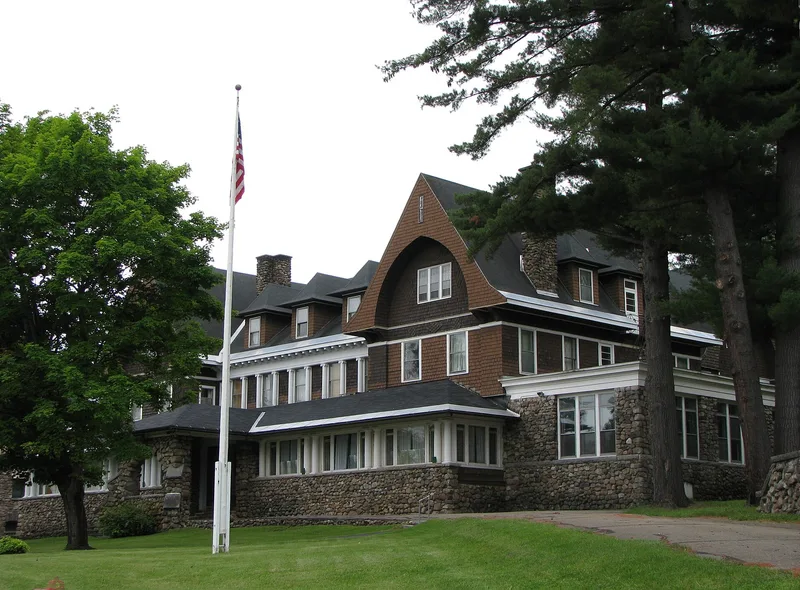
On the east slope of Mount Pisgah, just outside Saranac Lake, a hillside campus preserves the remains of the Trudeau Sanatorium. Dr. Edward L. Trudeau founded it in 1884 as the Adirondack Cottage Sanitarium, the first sustained and successful American sanatorium for treating tuberculosis scientifically. He chose the site for its shelter from south and west winds and for its view over the Saranac River valley. Patients lived in small one-story cottages with porches, an arrangement that gave the place the feel of a village. The campus grew over decades with architect-designed buildings, including the 1896 Main Building, a chapel, libraries, laboratories, staff housing, service buildings and stone gateways. After Trudeau's death in 1915 it was renamed in his memory, and building continued until about 1939. The sanatorium closed in 1954. Thirty-four historic resources remain on about sixty-six acres, though many patient cottages are gone and the surviving ones have enclosed porches. The long views remain largely intact.
Machine-generated summary. This summary was generated by a language model from the official nomination document and has not been reviewed line by line by an editor. It may contain errors. Check the source document before relying on any detail. Source: nomination document (PDF) · catalog entry. Generated October 2026 (model claude-sonnet-5-5, prompt v1.0-2026-10-29).
| Period of significance | 1884-1939 |
|---|---|
| Styles | Late Victorian; Late 19th and 20th Century Revivals |
| Areas of significance | Health/Medicine, Architecture |
| Acreage | 66 |
| Boundary source | NPS cultural-resource GIS polygon |
| Full listing page | Trudeau Sanatorium (property record) |
What listing means for this property
This is a historic district. Buildings within its boundary are either contributing (they add to the district's significance) or non-contributing. Owners of contributing income-producing buildings can claim the 20% federal rehabilitation tax credit; homeowners should look at state credits. National Register districts impose no design review by themselves; a local historic district ordinance, if one exists, does (the difference explained).
General information, not legal or tax advice. Rules change; confirm with your State Historic Preservation Office or a qualified adviser.