Third Ward Historic District (Boundary Increase)

The National Park Service has not published a boundary polygon for this district; the map shows the listed properties inside it and the district's reference point.
Why it's listed
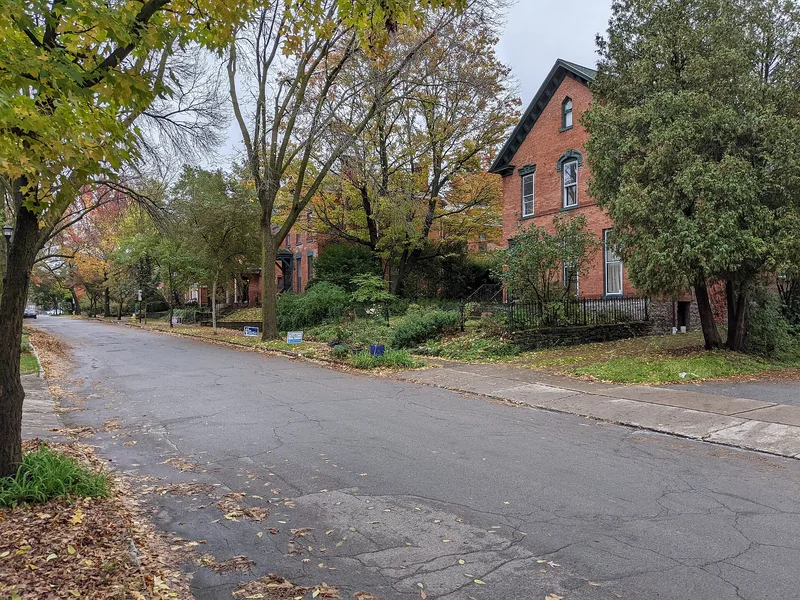
Tucked into the inner southwest corner of Rochester and cut off from downtown by Interstate 490, this seven-block residential district holds about 126 buildings and ten vacant lots. Most are brick houses, ranging from heavy Greek Revival "temples" to flamboyant late Victorian villas, with some early twentieth-century apartment buildings. Only a few mid-twentieth-century buildings intrude. From roughly 1830 to 1880 the Third Ward was the city's choicest residential neighborhood, set apart from the business district by the Erie Canal. Its homes reflect Rochester's mid-nineteenth-century economy: millers Hervey Ely and Benjamin Campbell built grand Greek Revival houses, and lumber merchants, a mayor and a telegraph pioneer also lived here. Leonard Jerome, grandfather of Winston Churchill, lived in the ward in the 1840s. After decay in the early twentieth century, urban renewal and a landmarks foundation that rehabilitated demonstration houses revived the area as a multi-income neighborhood.
Machine-generated summary. This summary was generated by a language model from the official nomination document and has not been reviewed line by line by an editor. It may contain errors. Check the source document before relying on any detail. Source: nomination document (PDF) · catalog entry. Generated October 2026 (model claude-sonnet-5-5, prompt v1.0-2026-10-29).
| Styles | Greek Revival, Italianate villas, Gothic and Carpenter Gothic, and late Victorian |
|---|---|
| Areas of significance | Architecture, Community Planning and Development, Ethnic Heritage-Black |
| Acreage | 51.64 |
| Boundary source | not published |
| Full listing page | Third Ward Historic District (Boundary Increase) (property record) |
What listing means for this property
This is a historic district. Buildings within its boundary are either contributing (they add to the district's significance) or non-contributing. Owners of contributing income-producing buildings can claim the 20% federal rehabilitation tax credit; homeowners should look at state credits. National Register districts impose no design review by themselves; a local historic district ordinance, if one exists, does (the difference explained).
General information, not legal or tax advice. Rules change; confirm with your State Historic Preservation Office or a qualified adviser.