Thendara Historic District

The National Park Service has not published a boundary polygon for this district; the map shows the listed properties inside it and the district's reference point.
Why it's listed
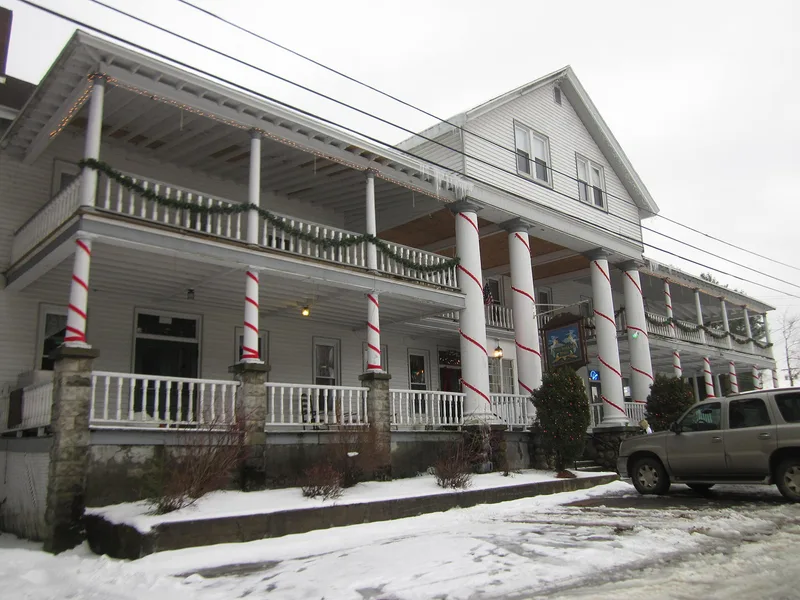
Five buildings from the 1890s make up this small district in Thendara, a hamlet near Old Forge in Herkimer County, New York. They cluster around a New York Central railroad passenger station at the head of the Fulton Chain of lakes, the gateway to the interior Adirondacks. The group includes the Moose River House hotel (1896), the Town Hall (about 1896), the Van Auken Tavern (1891), the passenger station (1894) and a freight house (1896). When rail service arrived in the early 1890s, tourism surged, and Thendara drew about 20,000 visitors a year, enough to support three hotels, steamboat service, sawmills, a post office and a town hall. The freight house also shipped timber out and carried supplies in. The Town Hall doubled as a social center for dances, theater and church services. The district is recognized for its architecture and its connection to rail transportation, with a significance period of 1891 to 1940.
Machine-generated summary. This summary was generated by a language model from the official nomination document and has not been reviewed line by line by an editor. It may contain errors. Check the source document before relying on any detail. Source: nomination document (PDF) · catalog entry. Generated October 2026 (model claude-sonnet-5-5, prompt v1.0-2026-10-29).
| Period of significance | 1891-1940 |
|---|---|
| Styles | Colonial Revival; Late Victorian: Queen Anne |
| Areas of significance | Architecture, Transportation |
| Acreage | 4.3 |
| Boundary source | not published |
| Full listing page | Thendara Historic District (property record) |
What listing means for this property
This is a historic district. Buildings within its boundary are either contributing (they add to the district's significance) or non-contributing. Owners of contributing income-producing buildings can claim the 20% federal rehabilitation tax credit; homeowners should look at state credits. National Register districts impose no design review by themselves; a local historic district ordinance, if one exists, does (the difference explained).
General information, not legal or tax advice. Rules change; confirm with your State Historic Preservation Office or a qualified adviser.