Tall Maples Miniature Golf Course

The National Park Service has not published a boundary polygon for this district; the map shows the listed properties inside it and the district's reference point.
Why it's listed
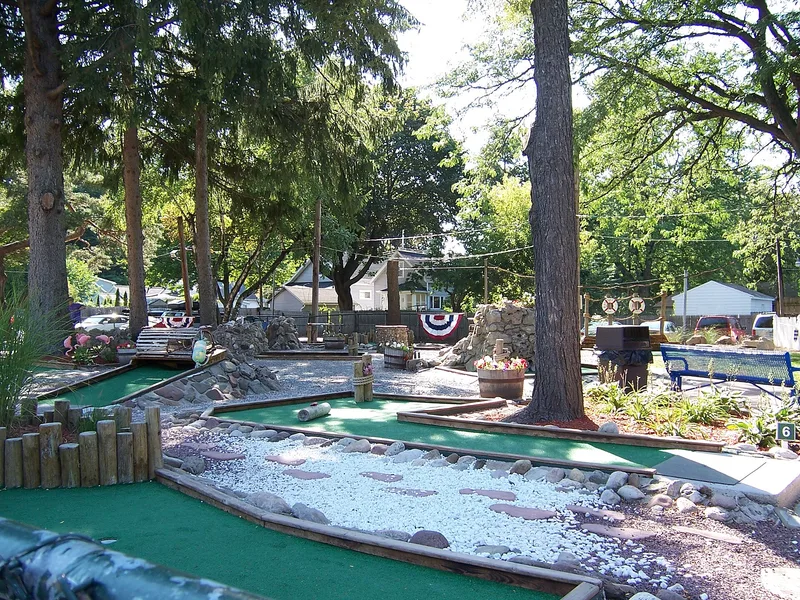
Tall Maples Miniature Golf Course is an 18-hole course on a small corner lot on Culver Road in Sea Breeze, in Irondequoit, New York. Built in 1930 by Paul Moore with his sons Nelson and Dayne and course builder Robert G. Ocorr, it includes a wood ticket booth and a small restroom building. The holes use wood curbs, low natural rock borders and exposed-aggregate concrete in a rustic style, with hazards such as a motorized windmill, dog-leg fairways, bi-level holes and a lighthouse folly. Mature conifers shade the course, and lights hang from wires strung through the trees. Little has changed apart from new playing surfaces and in-kind replacement of worn curbs. The course was listed because it is a rare, intact survivor from the miniature golf craze of 1930, the last of several courses laid out by Ocorr, and one of few reminders of Sea Breeze's heyday as a lakeshore amusement center. It is still open to players today.
Machine-generated summary. This summary was generated by a language model from the official nomination document and has not been reviewed line by line by an editor. It may contain errors. Check the source document before relying on any detail. Source: nomination document (PDF) · catalog entry. Generated October 2026 (model claude-sonnet-5-5, prompt v1.0-2026-10-29).
| Period of significance | 1930-1950 |
|---|---|
| Styles | OTHER |
| Areas of significance | Architecture, Entertainment/Recreation |
| Acreage | 0.3 |
| Boundary source | not published |
| Full listing page | Tall Maples Miniature Golf Course (property record) |
What listing means for this property
This is a historic district. Buildings within its boundary are either contributing (they add to the district's significance) or non-contributing. Owners of contributing income-producing buildings can claim the 20% federal rehabilitation tax credit; homeowners should look at state credits. National Register districts impose no design review by themselves; a local historic district ordinance, if one exists, does (the difference explained).
General information, not legal or tax advice. Rules change; confirm with your State Historic Preservation Office or a qualified adviser.