Stone Street Historic District

The National Park Service has not published a boundary polygon for this district; the map shows the listed properties inside it and the district's reference point.
Why it's listed
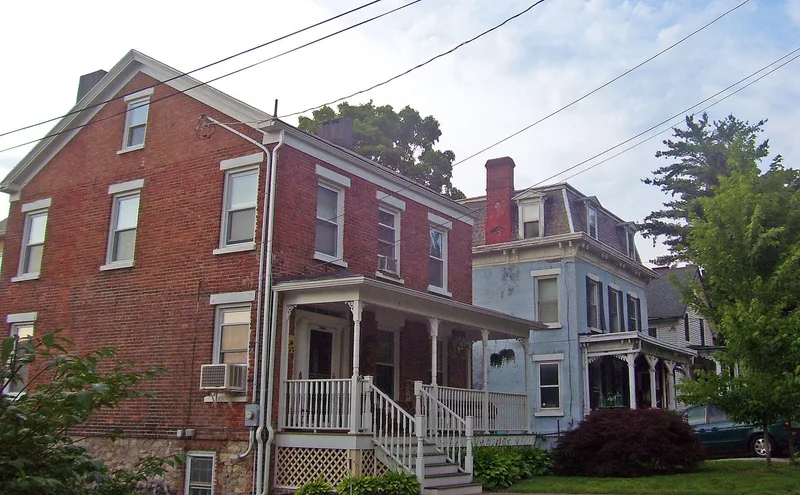
Four houses on the west side of Stone Street and Division Street in New Hamburg form a compact district of about one acre. Built between roughly 1845 and 1870, they show how local taste moved from Greek Revival to Victorian Gothic and Second Empire design. The brick house at 5 Stone Street, from about 1858, follows the two-story side-hall form common in the hamlet. Number 7, built in 1870, has a slate mansard roof and bracketed cornice, and is described as the most distinctive Second Empire residence in the area. Number 9 is a modest L-shaped house with decorated vergeboards, and 18 Division Street is a formal center-hall frame house in Victorian Gothic style. All four lots came from one parcel bought by Samuel T. and Maria Ellis in 1841. Railroad widening in the late 1920s removed the houses across the street, leaving these as the best-preserved group from New Hamburg's most prosperous period, tied to the river trade and railroad.
Machine-generated summary. This summary was generated by a language model from the official nomination document and has not been reviewed line by line by an editor. It may contain errors. Check the source document before relying on any detail. Source: nomination document (PDF) · catalog entry. Generated October 2026 (model claude-sonnet-5-5, prompt v1.0-2026-10-29).
| Period of significance | 1845-1870 |
|---|---|
| Styles | Greek Revival, Gothic Revival (Victorian Gothic/Picturesque) and Second Empire; Hudson River Bracketed |
| Areas of significance | Architecture |
| Acreage | 1 |
| Boundary source | not published |
| Full listing page | Stone Street Historic District (property record) |
What listing means for this property
This is a historic district. Buildings within its boundary are either contributing (they add to the district's significance) or non-contributing. Owners of contributing income-producing buildings can claim the 20% federal rehabilitation tax credit; homeowners should look at state credits. National Register districts impose no design review by themselves; a local historic district ordinance, if one exists, does (the difference explained).
General information, not legal or tax advice. Rules change; confirm with your State Historic Preservation Office or a qualified adviser.