Stillman Farmstead

Why it's listed
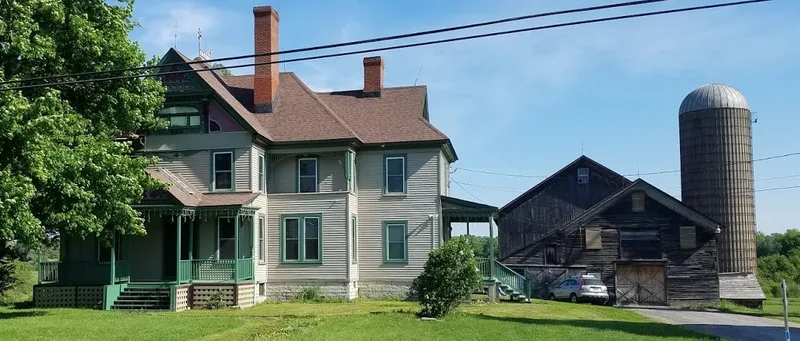
This farmstead on Route 104 east of the village of Mexico, in Oswego County, covers 92.5 acres and includes a seventeen-room Queen Anne farmhouse, a barn, and an early-twentieth century garage. Chester and Almira Stillman bought the first 60 acres in 1828 and another 30 in 1835. They built a log cabin, then a small frame house. In 1889 their son Charles had his brother Henry, a printer by trade, build the present house, with carved dormers, a decorative porch and walnut interior woodwork. The barn, begun in 1840, grew in stages from storage building to dairy barn, and its later milkhouses and early square silo record changes in dairy farming. The garage reflects the growing role of automobiles on farms. The Stillman family owned the farm until 1913. Its listing rests on its agricultural history and its architecture, and it still operates as a farm.
Machine-generated summary. This summary was generated by a language model from the official nomination document and has not been reviewed line by line by an editor. It may contain errors. Check the source document before relying on any detail. Source: nomination document (PDF) · catalog entry. Generated October 2026 (model claude-sonnet-5-5, prompt v1.0-2026-10-29).
| Period of significance | 1840-1913 (amended from the 1828-1913 stated on the form) |
|---|---|
| Styles | Queen Anne |
| Areas of significance | Agriculture, Architecture |
| Acreage | 92.5 |
| Boundary source | NPS cultural-resource GIS polygon |
| Full listing page | Stillman Farmstead (property record) |
What listing means for this property
This is a historic district. Buildings within its boundary are either contributing (they add to the district's significance) or non-contributing. Owners of contributing income-producing buildings can claim the 20% federal rehabilitation tax credit; homeowners should look at state credits. National Register districts impose no design review by themselves; a local historic district ordinance, if one exists, does (the difference explained).
General information, not legal or tax advice. Rules change; confirm with your State Historic Preservation Office or a qualified adviser.