Statue of Liberty National Monument, Ellis Island and Liberty Island
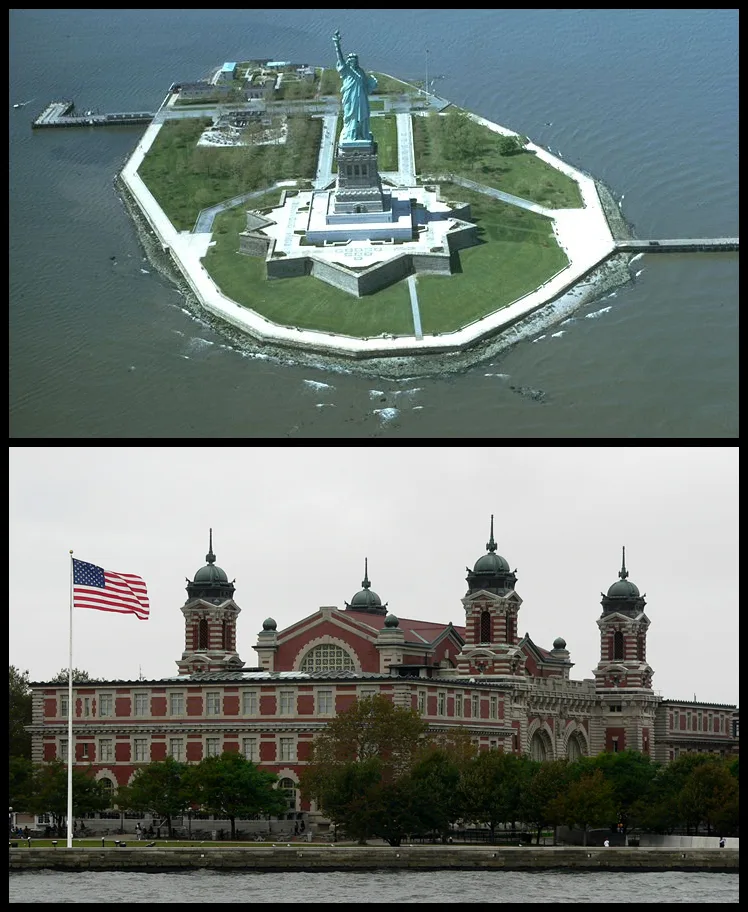

Why it's listed
Liberty Island and Ellis Island in upper New York Harbor together form a national monument tied to American ideals and immigration. On Liberty Island, the copper Statue of Liberty, designed by sculptor Frederic Auguste Bartholdi, was built in France between 1875 and 1884 and dedicated in 1886. It rises 152 feet above a granite-faced pedestal designed by Richard Morris Hunt, set within the eleven-point star of Fort Wood, a harbor fortification built in 1811 and rebuilt in 1844. Alexandre Gustave Eiffel designed the iron framework supporting the copper sheets. The statue was conceived as a joint memorial to French and American friendship, and public subscription organized by Joseph Pulitzer's newspaper paid for the pedestal. Nearby Ellis Island served as the federal immigration station from 1892 to 1954, processing upwards of 16 million arrivals. Its main building and great examination hall remain its best-known features. Ellis Island became part of the monument in 1965.
Machine-generated summary. This summary was generated by a language model from the official nomination document and has not been reviewed line by line by an editor. It may contain errors. Check the source document before relying on any detail. Source: nomination document (PDF) · catalog entry. Generated October 2026 (model claude-sonnet-5-5, prompt v1.0-2026-10-29).
| Period of significance | 1875-1884 |
|---|---|
| Areas of significance | Art, Military, Engineering, European, Politics/Government, Architecture, Social History |
| Acreage | 40.2 |
| Boundary source | NPS cultural-resource GIS polygon |
| Full listing page | Statue of Liberty National Monument, Ellis Island and Liberty Island (property record) |
What listing means for this property
This is a historic district. Buildings within its boundary are either contributing (they add to the district's significance) or non-contributing. Owners of contributing income-producing buildings can claim the 20% federal rehabilitation tax credit; homeowners should look at state credits. National Register districts impose no design review by themselves; a local historic district ordinance, if one exists, does (the difference explained).
General information, not legal or tax advice. Rules change; confirm with your State Historic Preservation Office or a qualified adviser.