St. Nicholas Historic District

The National Park Service has not published a boundary polygon for this district; the map shows the listed properties inside it and the district's reference point.
Why it's listed
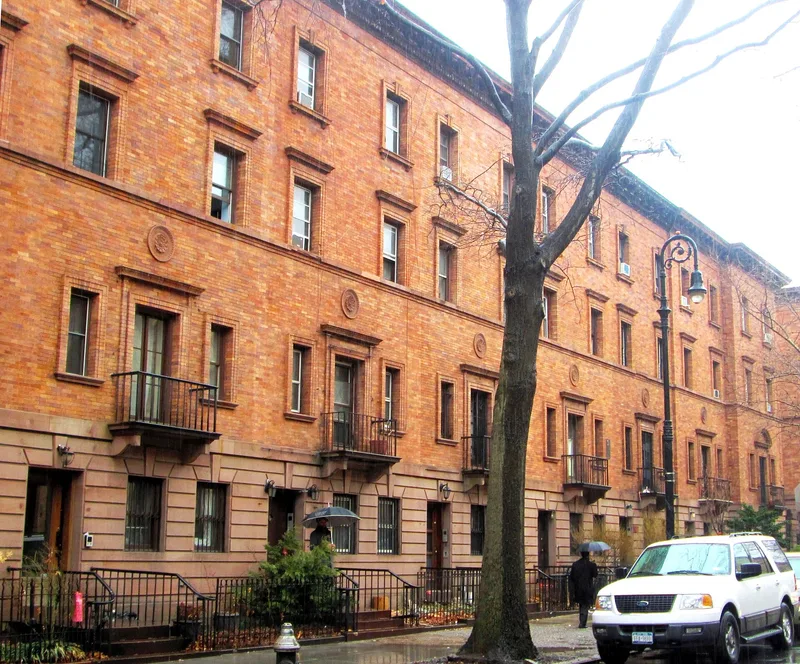
Four rows of townhouses and three apartment buildings line West 138th and 139th Streets between Seventh and Eighth Avenues in Harlem. Developer David H. King commissioned them in 1891 from three architectural firms: James Brown Lord on the south side of 138th Street, Bruce Price and Clarence S. Luce for the middle rows, and McKim, Mead and White on the north side of 139th Street. Materials vary from red brick with brownstone trim to buff brick with limestone and dark mottled brick, yet uniform heights and cornices unify the blocks. Wrought-iron gateways lead to service alleys behind the houses, a feature the nomination found unusual among King's work. After the 1904 panic, houses were opened to Black buyers, and by 1919 many were bought by professionals. Residents included surgeons, the musician W. C. Handy and members of the "Shuffle Along" company, and the area became known as "Striver's Row". The blocks remain well maintained residences.
Machine-generated summary. This summary was generated by a language model from the official nomination document and has not been reviewed line by line by an editor. It may contain errors. Check the source document before relying on any detail. Source: nomination document (PDF) · catalog entry. Generated October 2026 (model claude-sonnet-5-5, prompt v1.0-2026-10-29).
| Period of significance | 19th Century (specific date 1891) |
|---|---|
| Styles | Georgian (Eclectic period) and Italian Renaissance row houses |
| Areas of significance | Community Planning and Development, Architecture |
| Acreage | 9.9 |
| Boundary source | not published |
| Full listing page | St. Nicholas Historic District (property record) |
What listing means for this property
This is a historic district. Buildings within its boundary are either contributing (they add to the district's significance) or non-contributing. Owners of contributing income-producing buildings can claim the 20% federal rehabilitation tax credit; homeowners should look at state credits. National Register districts impose no design review by themselves; a local historic district ordinance, if one exists, does (the difference explained).
General information, not legal or tax advice. Rules change; confirm with your State Historic Preservation Office or a qualified adviser.