Southside Sportsmens Club District

Why it's listed
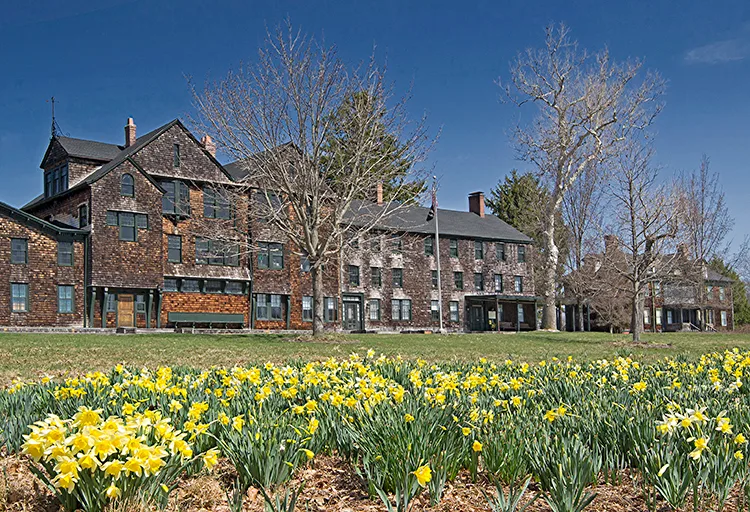
Along the Connetquot River at Great River, a 3,528-acre tract of marshes, woodlands, ponds and brooks holds the Southside Sportsmens Club, a sporting retreat that grew from Snedicor's Inn, a tavern for travelers and hunters operating by the 1820s to 1836. After the Snedicor family retired in 1866, one hundred customers bought the property and formed the club. Its shingled clubhouse folds the old inn into a sixteen-bay structure, with a billiard room wing, a large 1886-87 enlargement planned by Bradford L. Gilbert, and two annexes from 1879 and 1903. A mid-18th century grist mill still stands at the dam. Members included Charles Tiffany, William K. Vanderbilt and Theodore Roosevelt, and many built nearby estates. The district is valued for its intact buildings, its largely unchanged 19th-century atmosphere, and more than a century of careful land management.
Machine-generated summary. This summary was generated by a language model from the official nomination document and has not been reviewed line by line by an editor. It may contain errors. Check the source document before relying on any detail. Source: nomination document (PDF) · catalog entry. Generated October 2026 (model claude-sonnet-5-5, prompt v1.0-2026-10-29).
| Period of significance | 19th Century |
|---|---|
| Styles | Shingled sportsmen's lodge buildings; Colonial Revival (north annex); vernacular (mill) |
| Areas of significance | Conservation, Architecture, Social History |
| Acreage | 3528 |
| Boundary source | NPS cultural-resource GIS polygon |
| Full listing page | Southside Sportsmens Club District (property record) |
What listing means for this property
This is a historic district. Buildings within its boundary are either contributing (they add to the district's significance) or non-contributing. Owners of contributing income-producing buildings can claim the 20% federal rehabilitation tax credit; homeowners should look at state credits. National Register districts impose no design review by themselves; a local historic district ordinance, if one exists, does (the difference explained).
General information, not legal or tax advice. Rules change; confirm with your State Historic Preservation Office or a qualified adviser.