South Street Historic District

Why it's listed
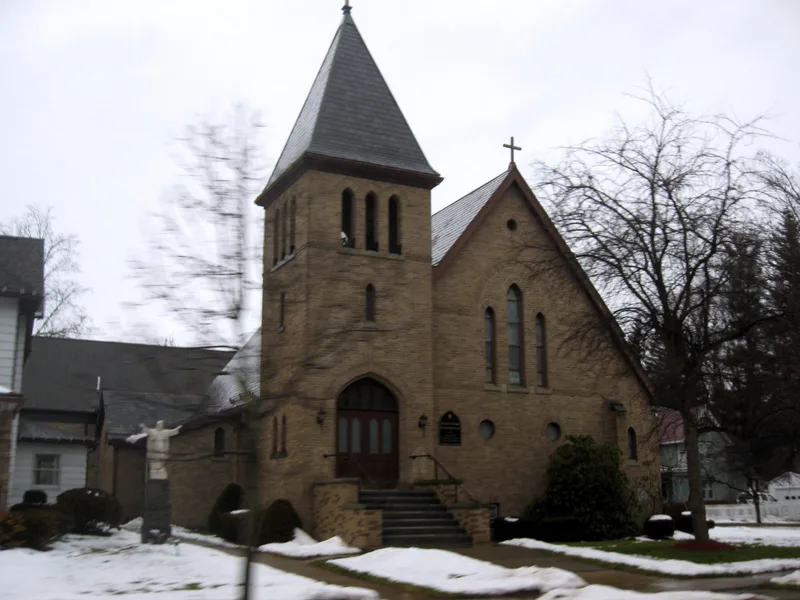
South Street in the village of Cuba, Allegany County, is lined with 40 properties built between about 1840 and about 1938, including 37 residences and three brick churches. The four-block, quarter-mile district sits just south of the main business area and is described as the village's most prestigious neighborhood. Maple trees, deep lawns, wide sidewalks and early twentieth century lamp posts give the street a boulevard feel. Most buildings are wood-frame with clapboard siding, and many carry elaborate ornament on gables, cornices and porches. Styles range from Greek Revival and Italianate to Queen Anne, Eastlake, Neoclassical and Colonial Revival. The street was listed for its architectural variety, its high level of integrity and its record of the village's growth from an early trading stopover into a commercial and industrial center tied to cheese, lumber, tanning, railroads and canal transport. Several houses are also associated with prominent early settlers and citizens.
Machine-generated summary. This summary was generated by a language model from the official nomination document and has not been reviewed line by line by an editor. It may contain errors. Check the source document before relying on any detail. Source: nomination document (PDF) · catalog entry. Generated October 2026 (model claude-sonnet-5-5, prompt v1.0-2026-10-29).
| Period of significance | ca. 1840-1938-39 |
|---|---|
| Styles | Varied: Greek Revival, Italianate, Gothic Revival, Queen Anne, Eastlake, Colonial Revival, Georgian Revival, Neoclassical, Romanesque Revival and Bungalow, giving an overall late Victorian/early Colonial Revival character |
| Areas of significance | Architecture |
| Acreage | 12 |
| Boundary source | NPS cultural-resource GIS polygon |
| Full listing page | South Street Historic District (property record) |
What listing means for this property
This is a historic district. Buildings within its boundary are either contributing (they add to the district's significance) or non-contributing. Owners of contributing income-producing buildings can claim the 20% federal rehabilitation tax credit; homeowners should look at state credits. National Register districts impose no design review by themselves; a local historic district ordinance, if one exists, does (the difference explained).
General information, not legal or tax advice. Rules change; confirm with your State Historic Preservation Office or a qualified adviser.